GPRM Prestress | Precast Concrete Manufacturing
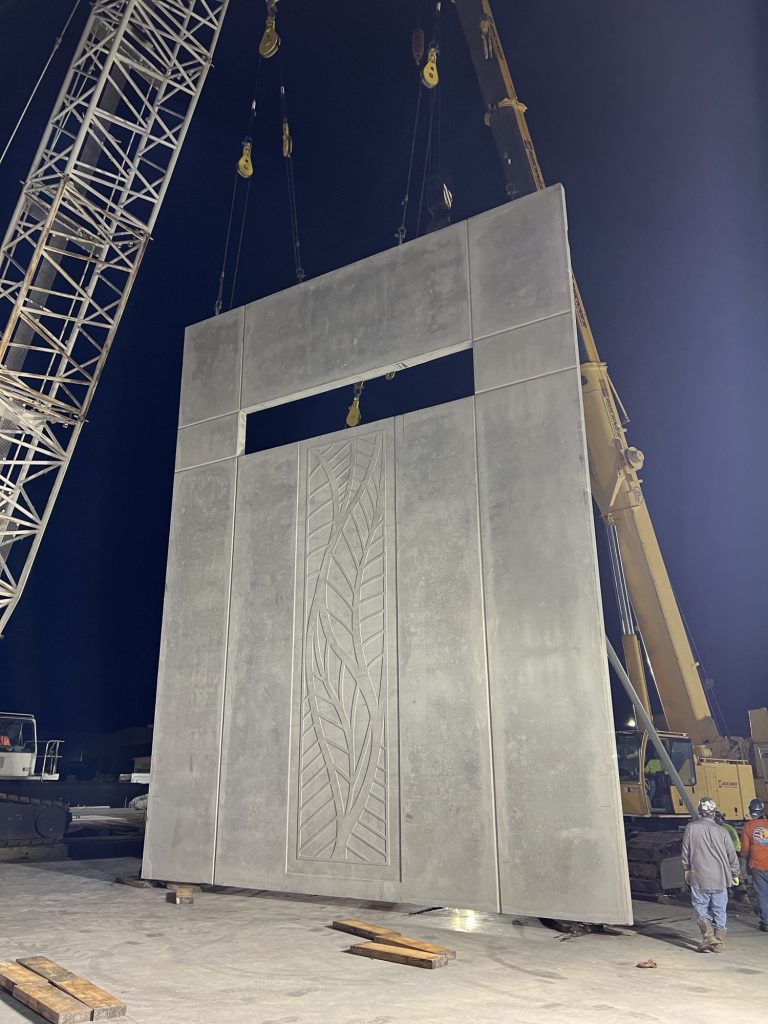
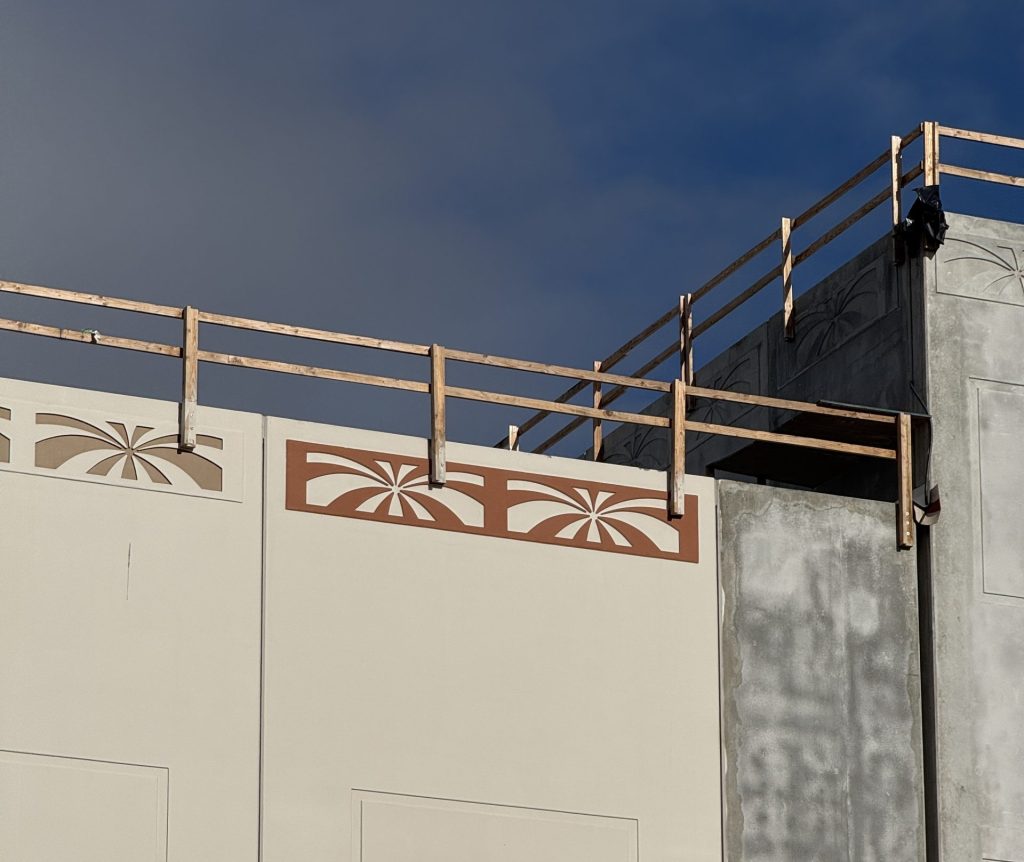
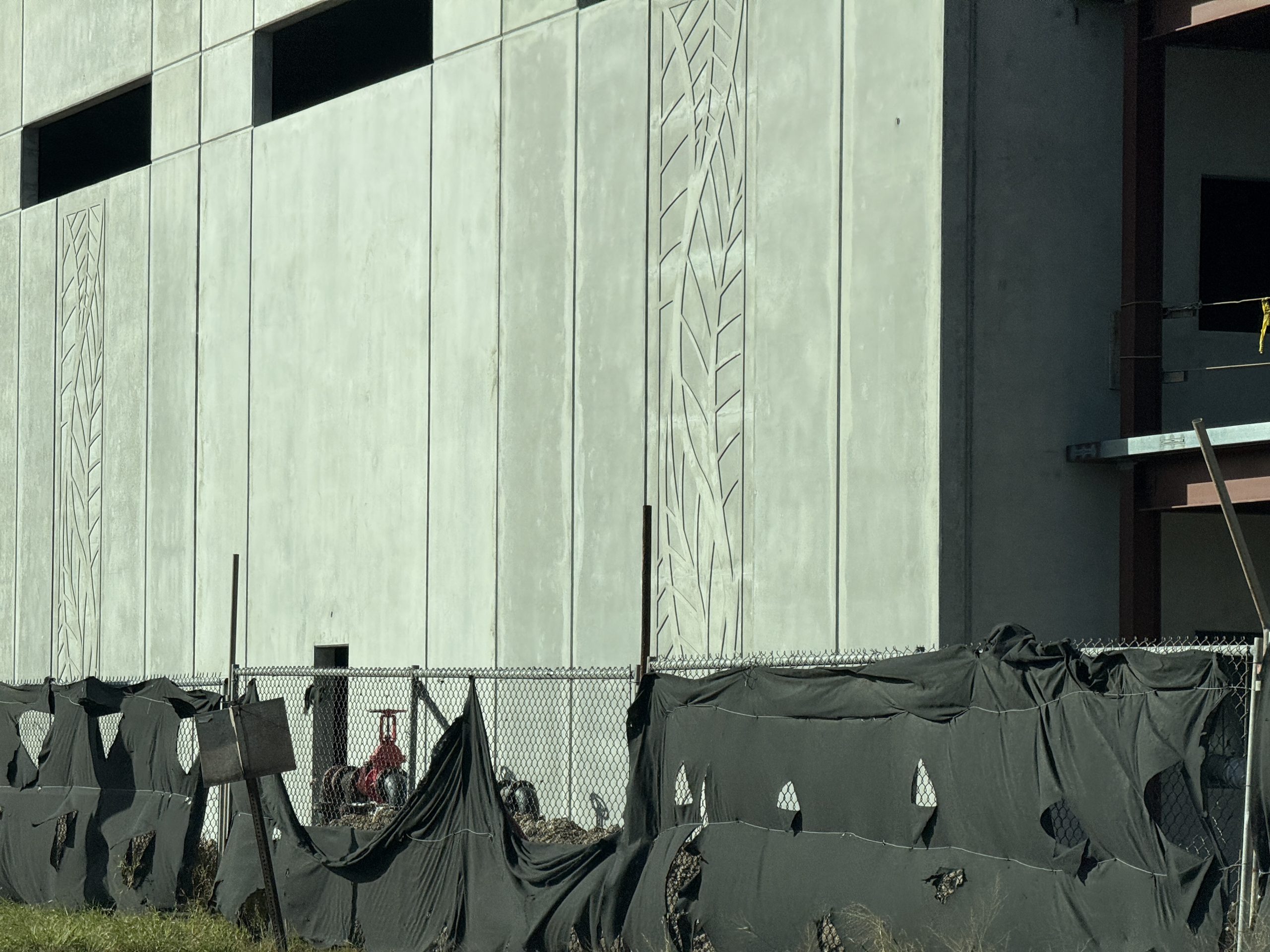
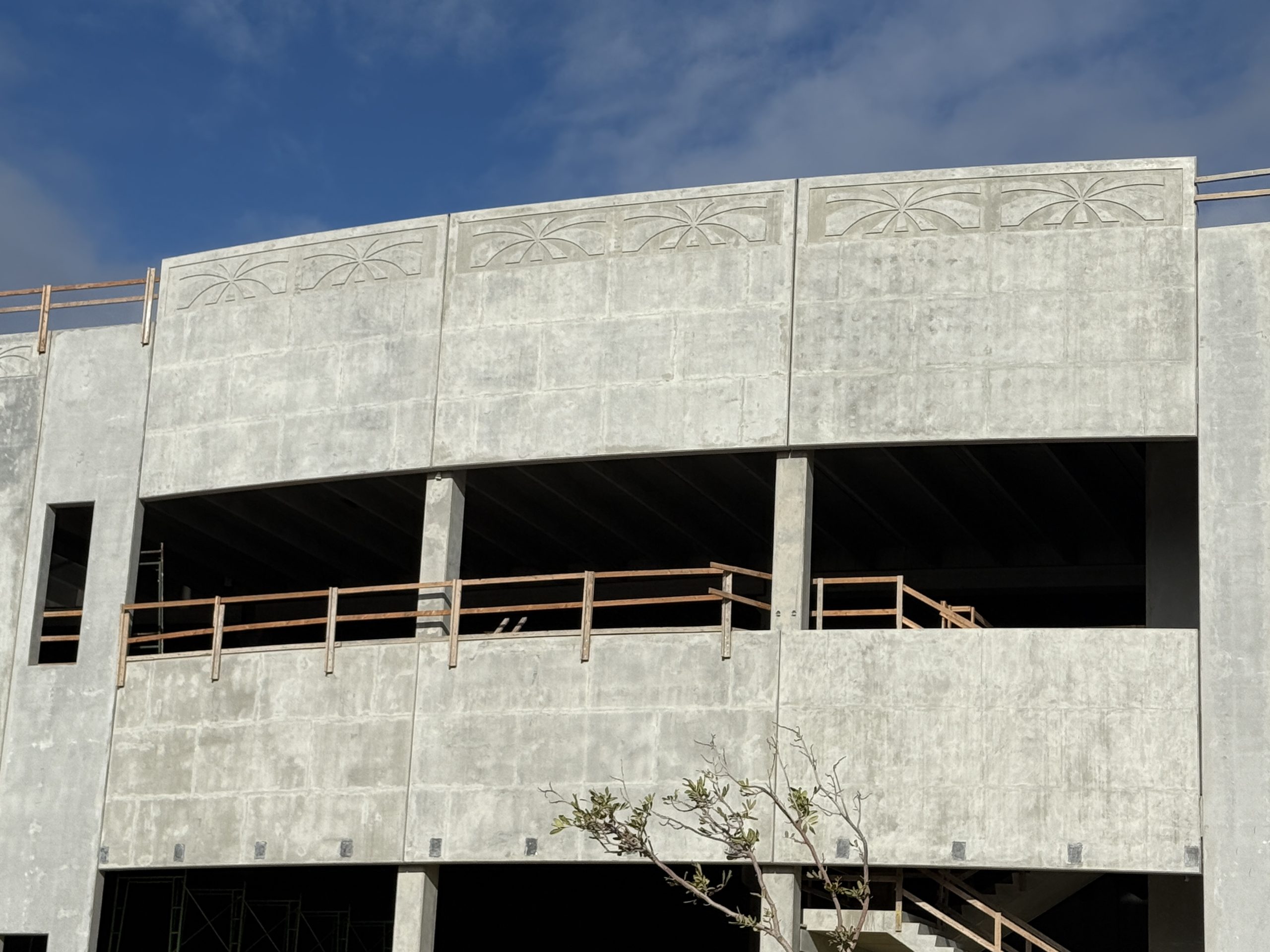
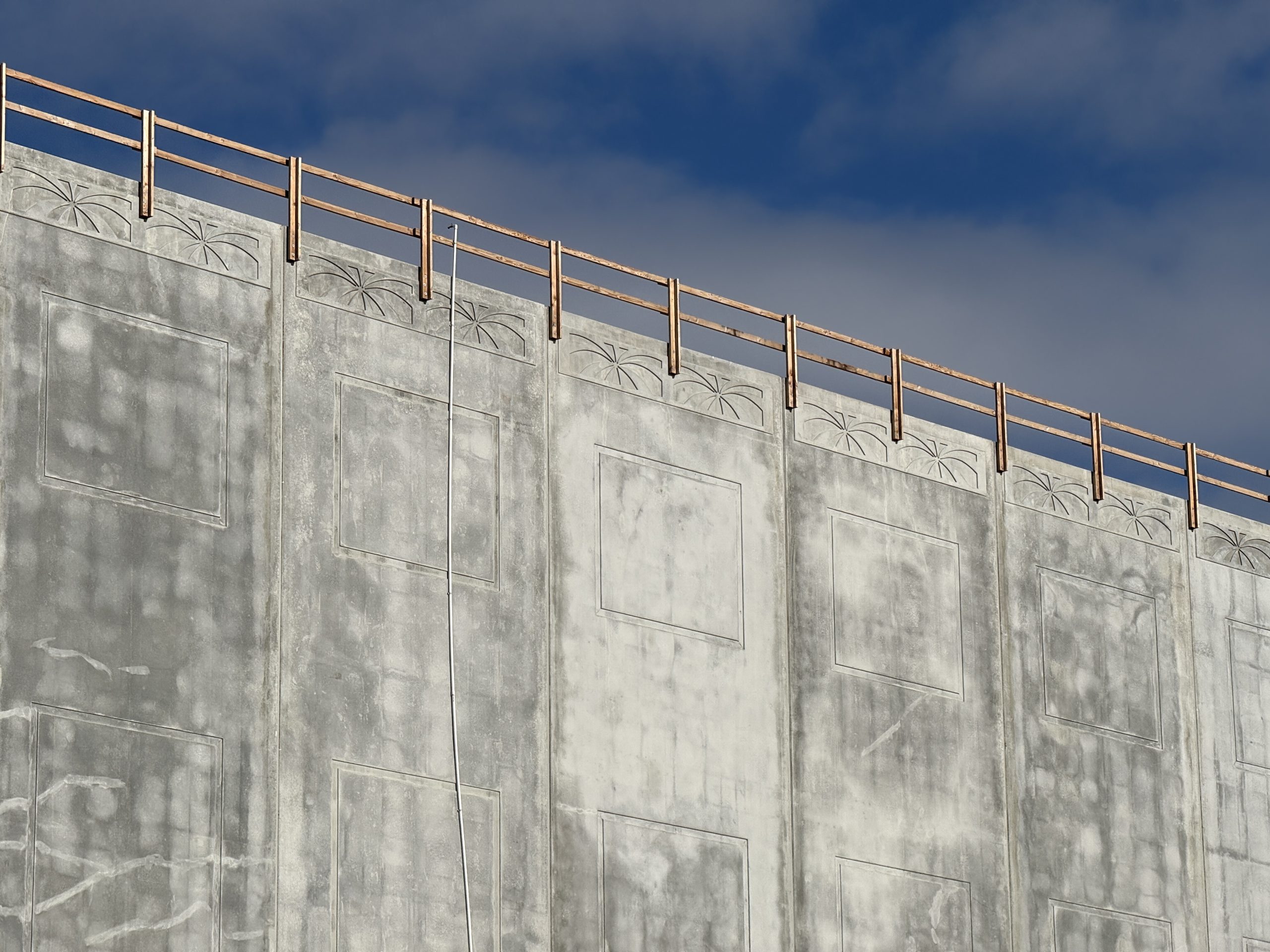
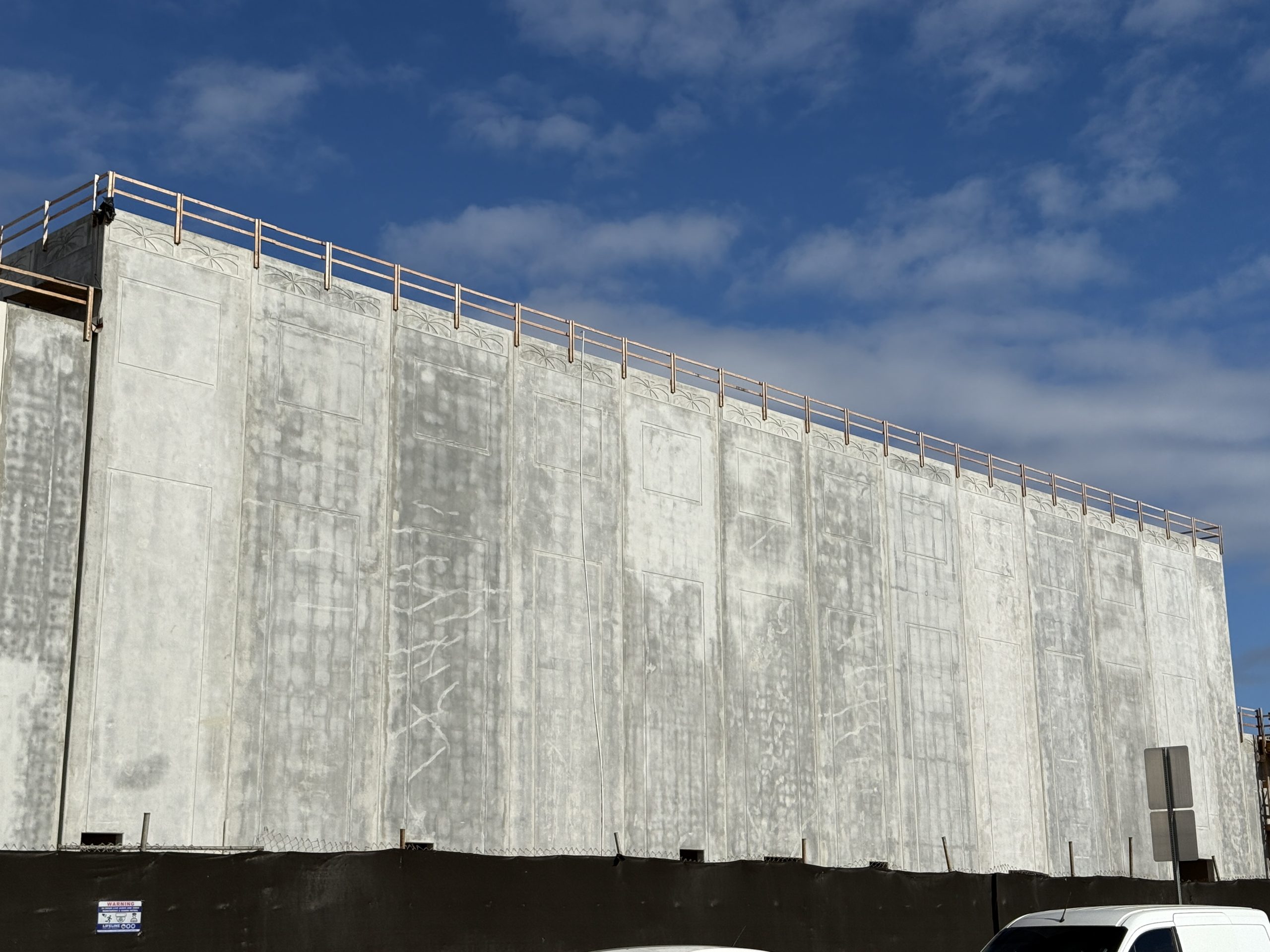
GPRM Prestress manufactures precast wall assemblies and pre-tensioned floor systems and needed a way to incorporate custom surface designs directly into their concrete panels while maintaining repeatability across production runs.
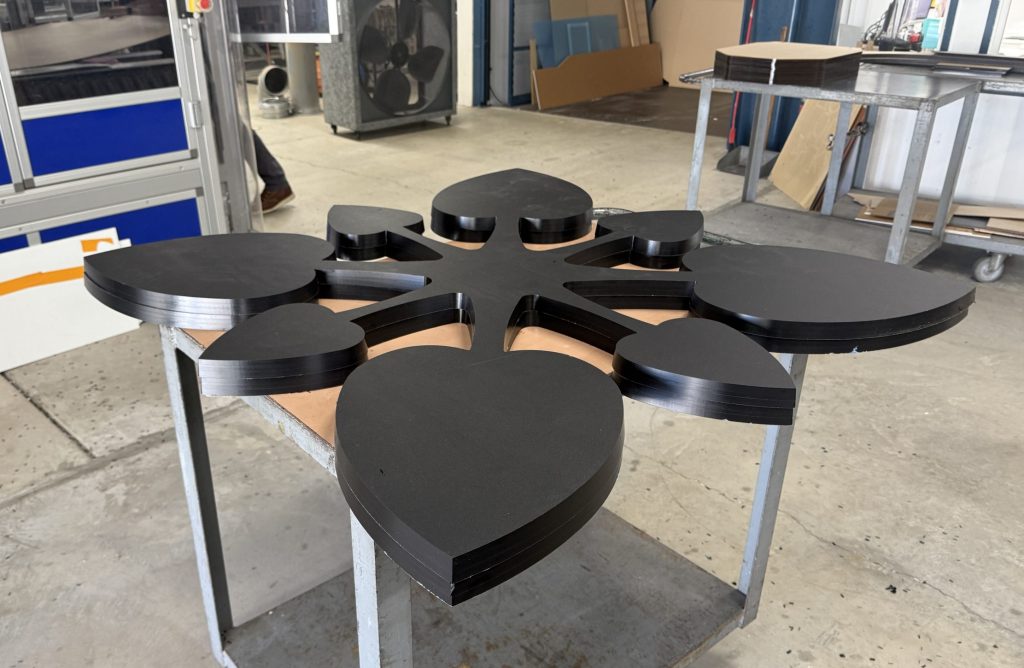
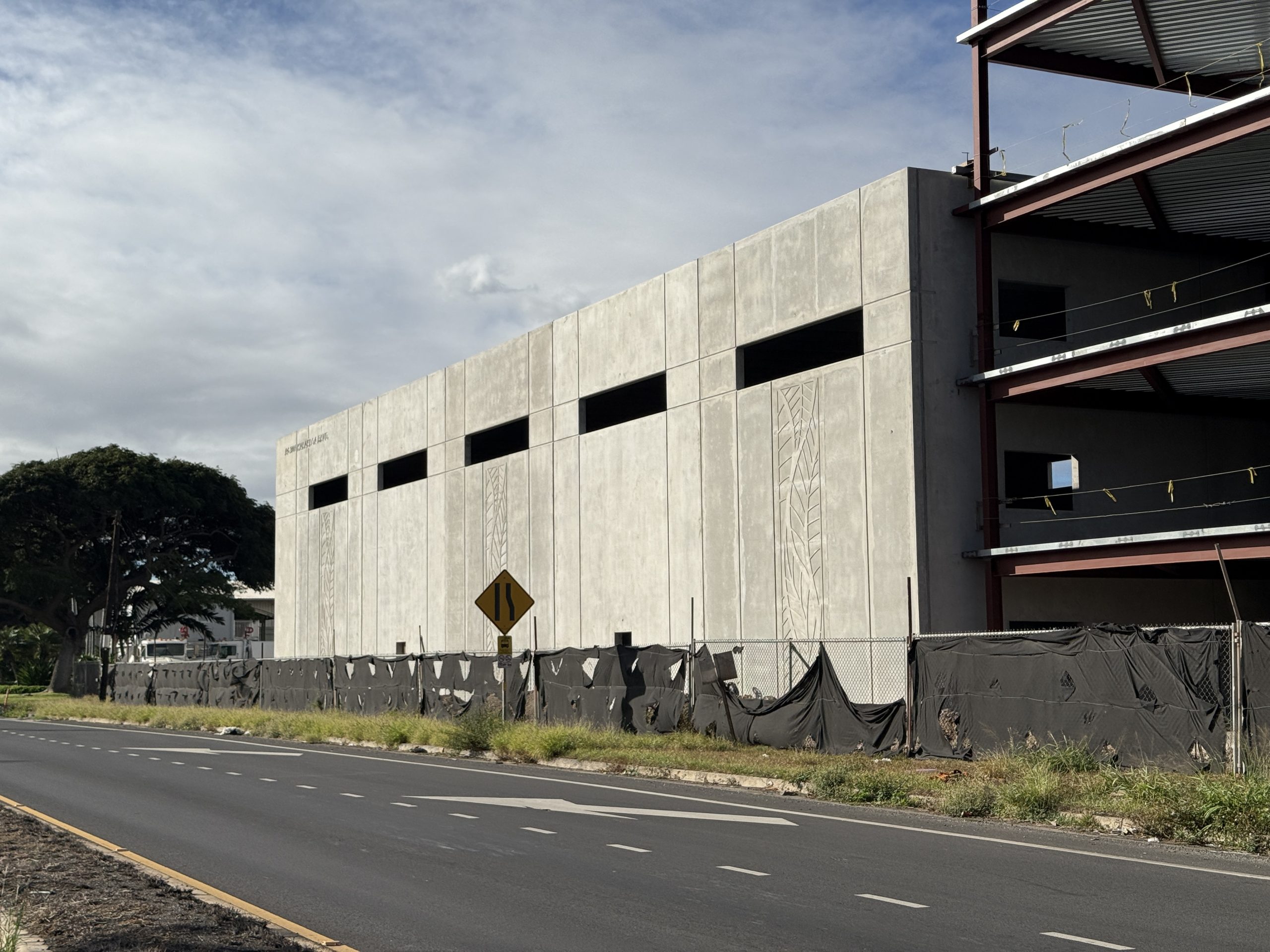
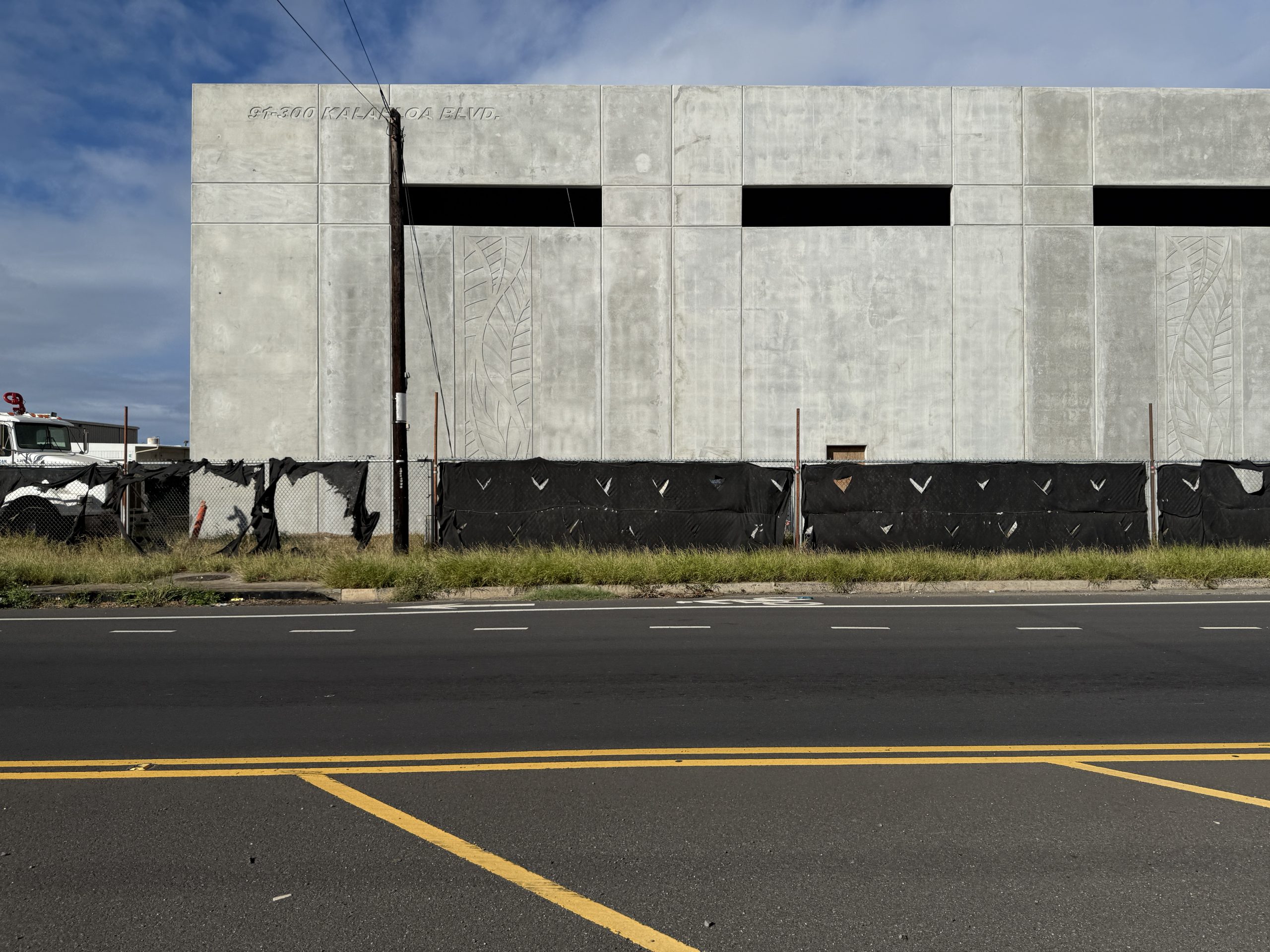
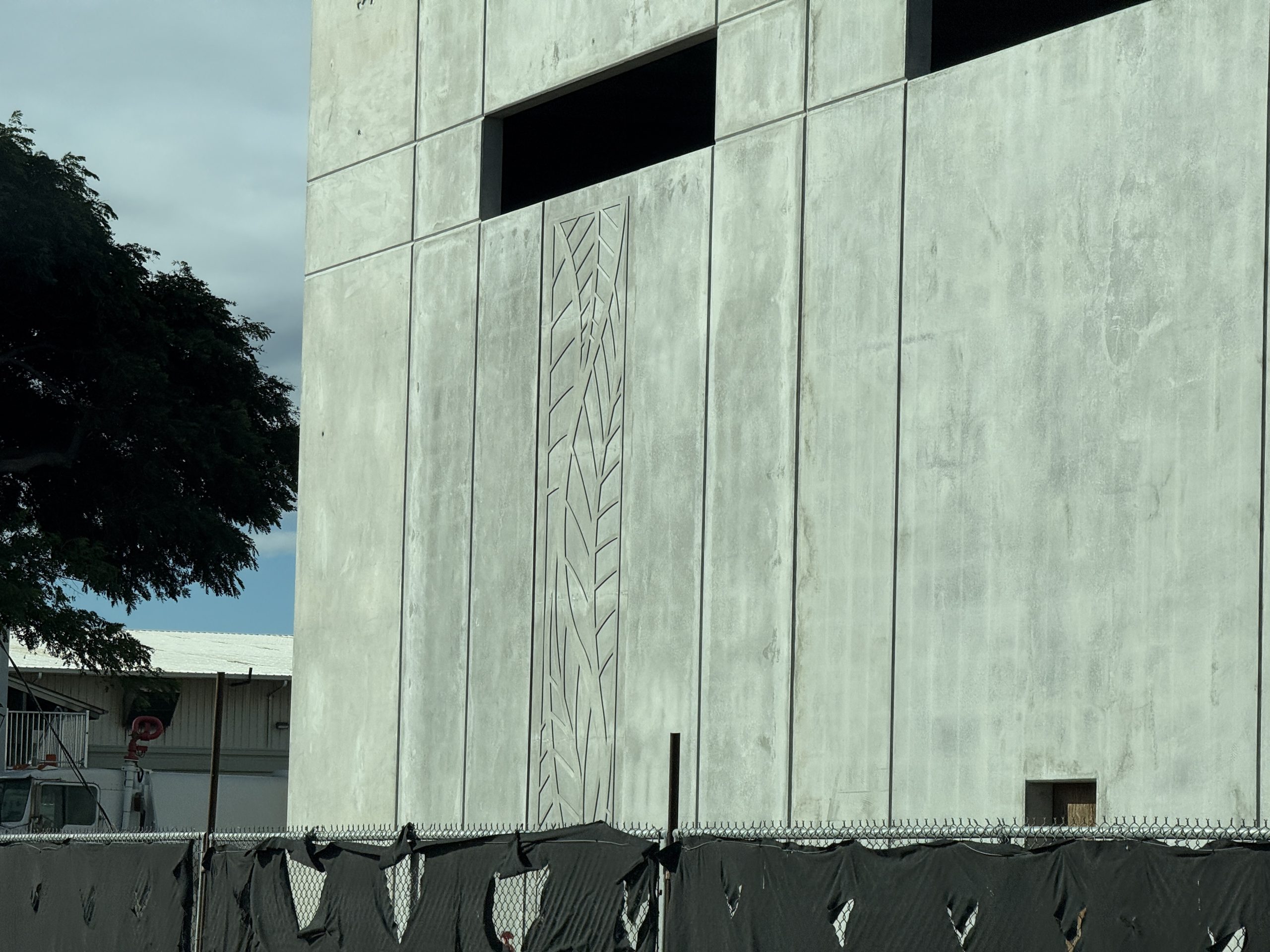
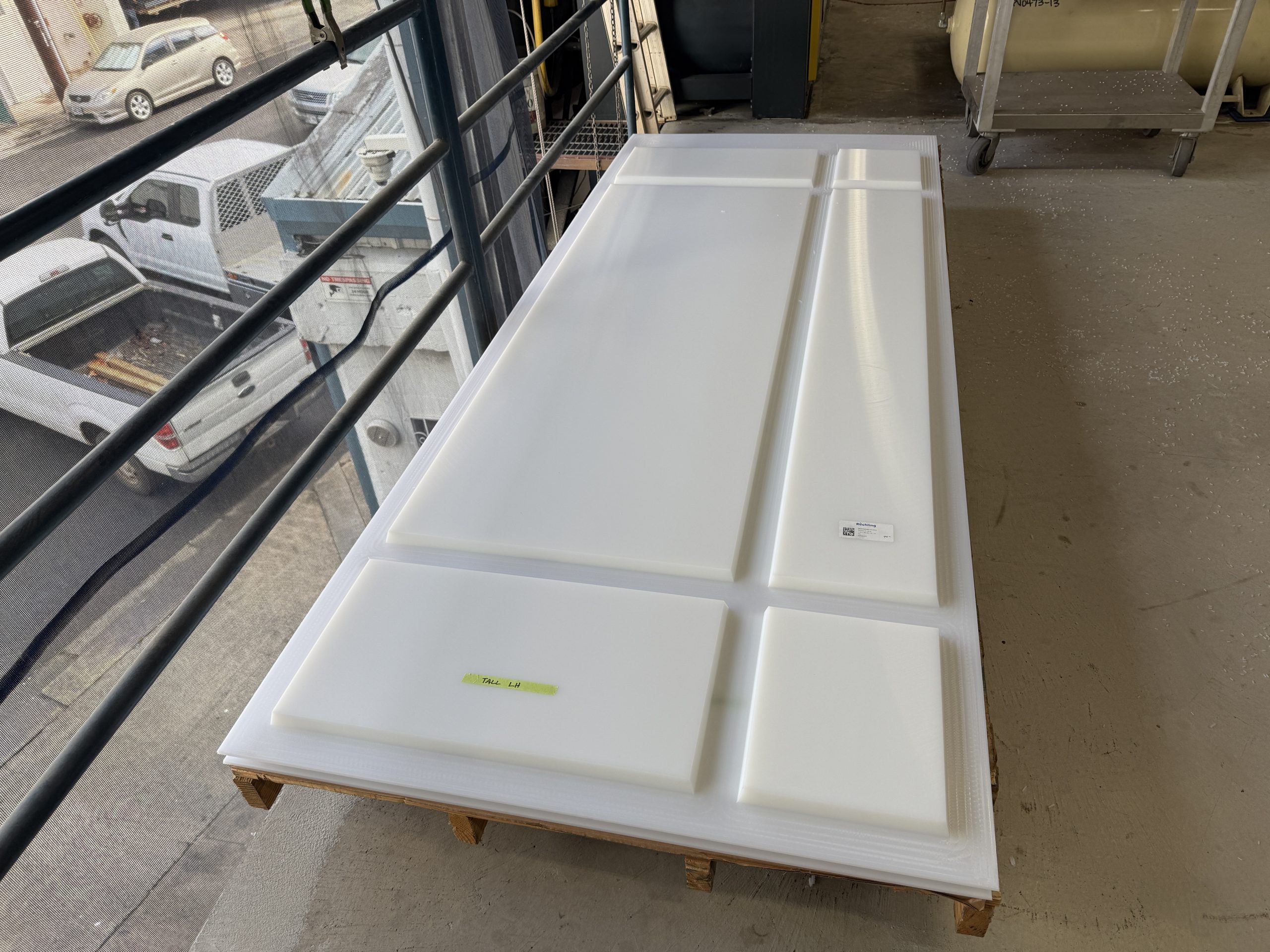
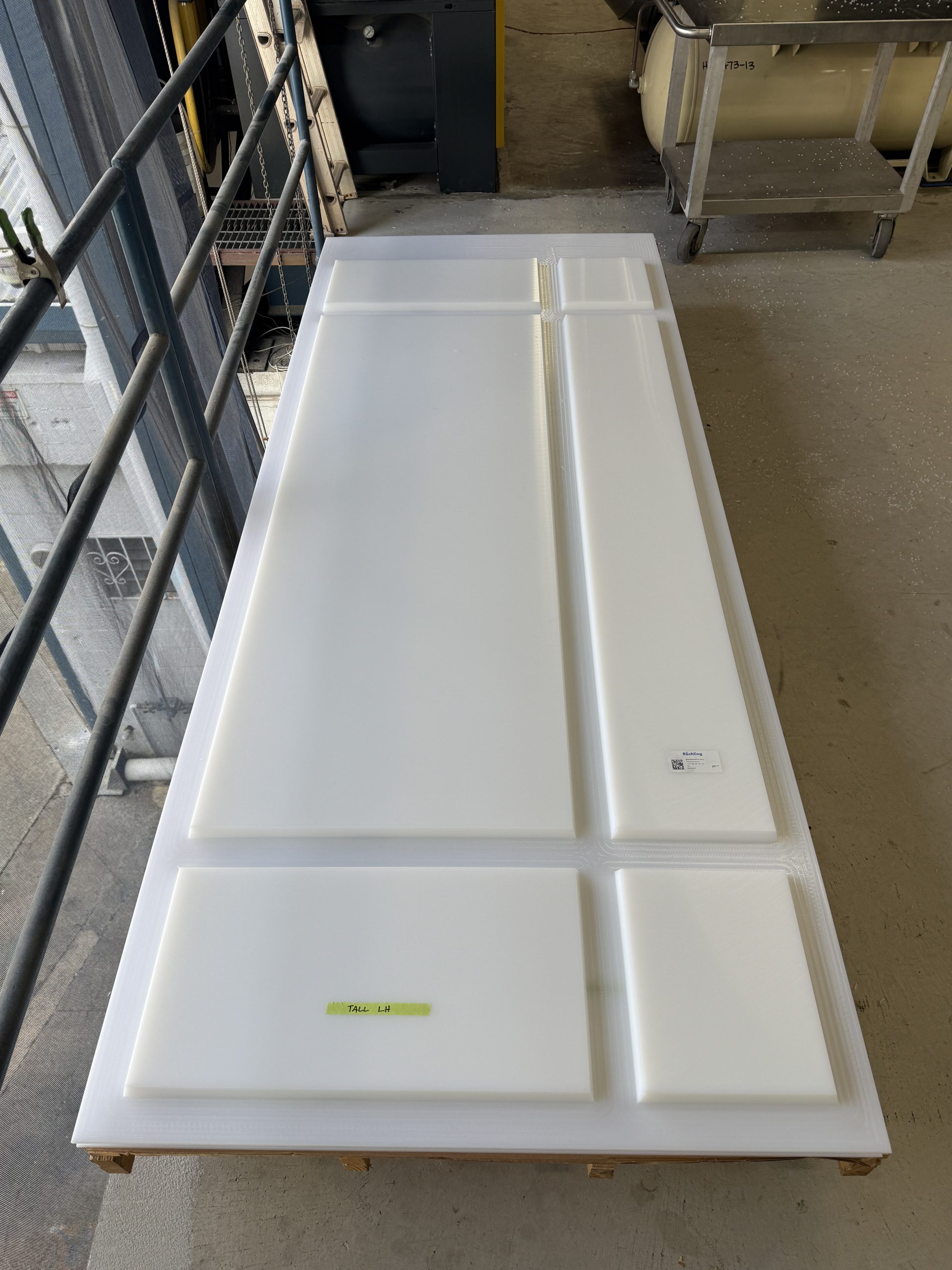
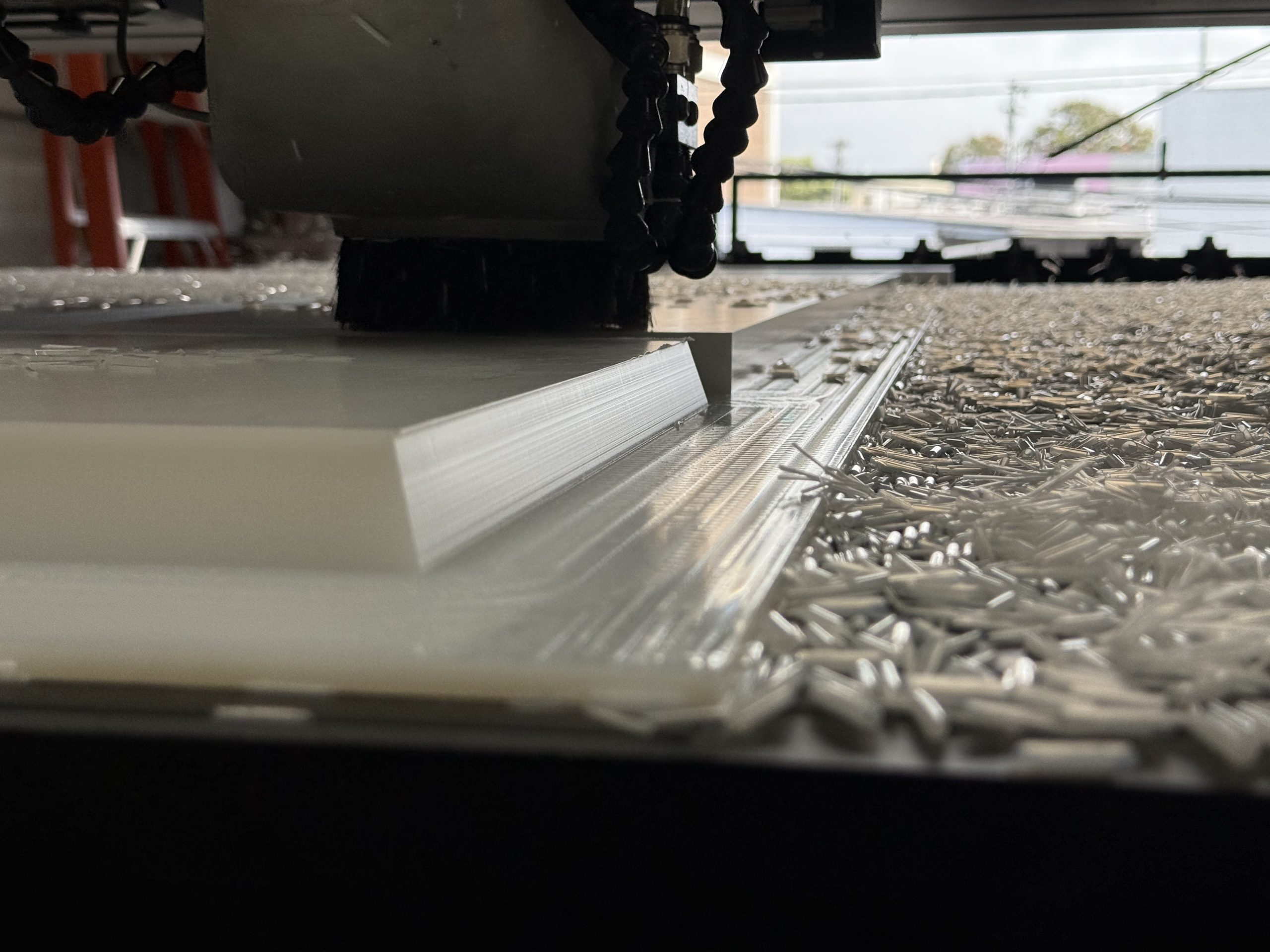
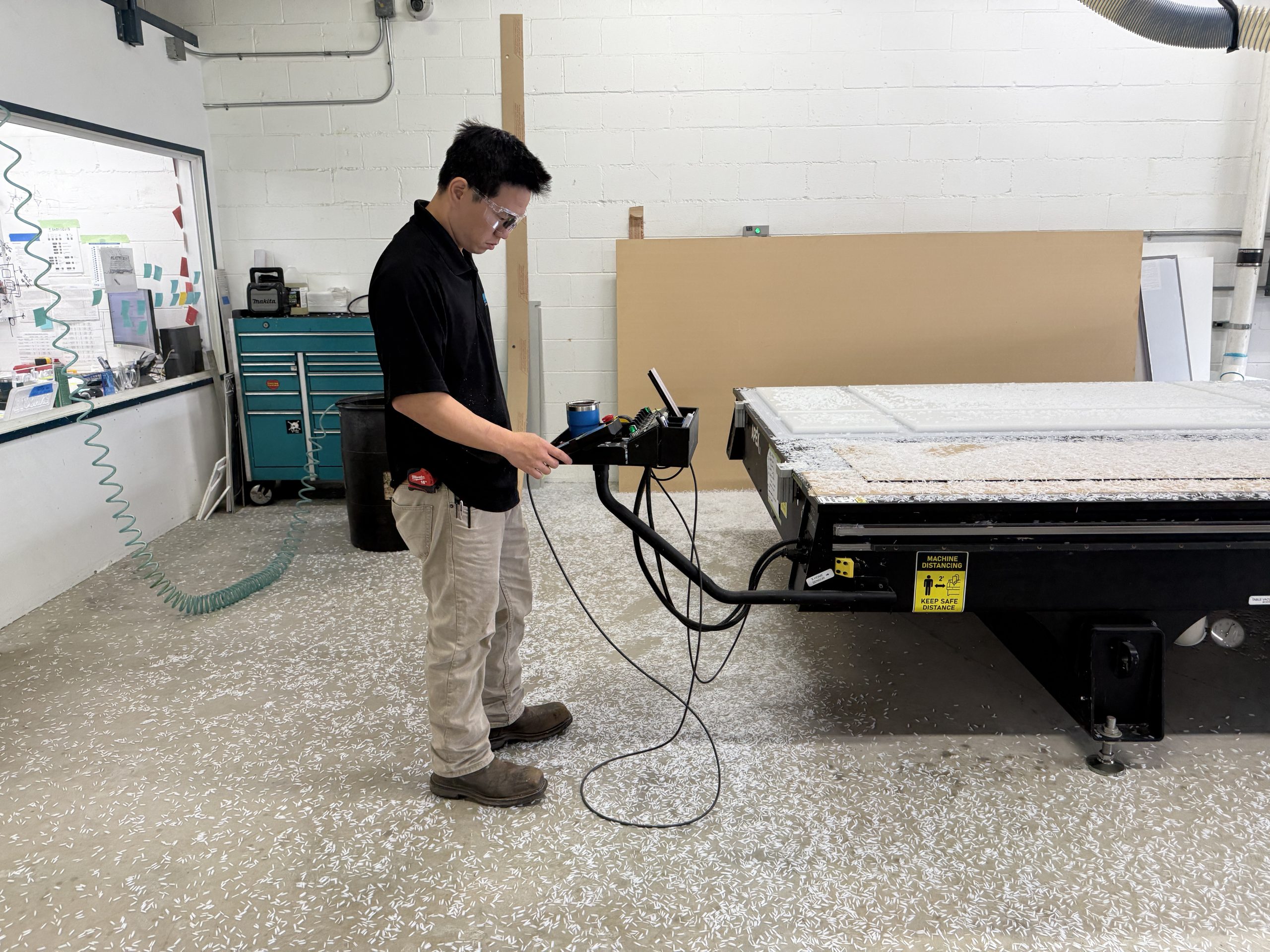
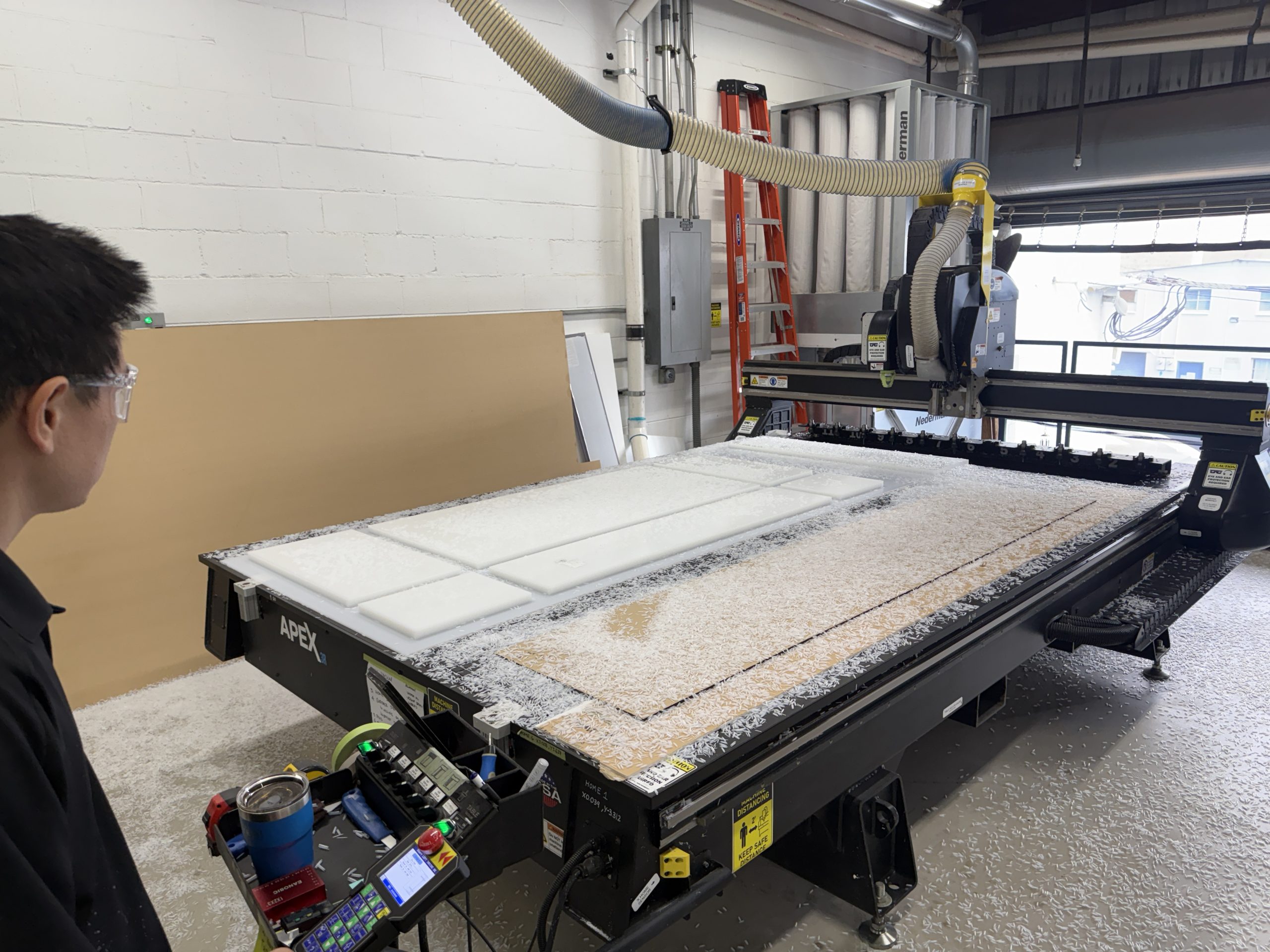
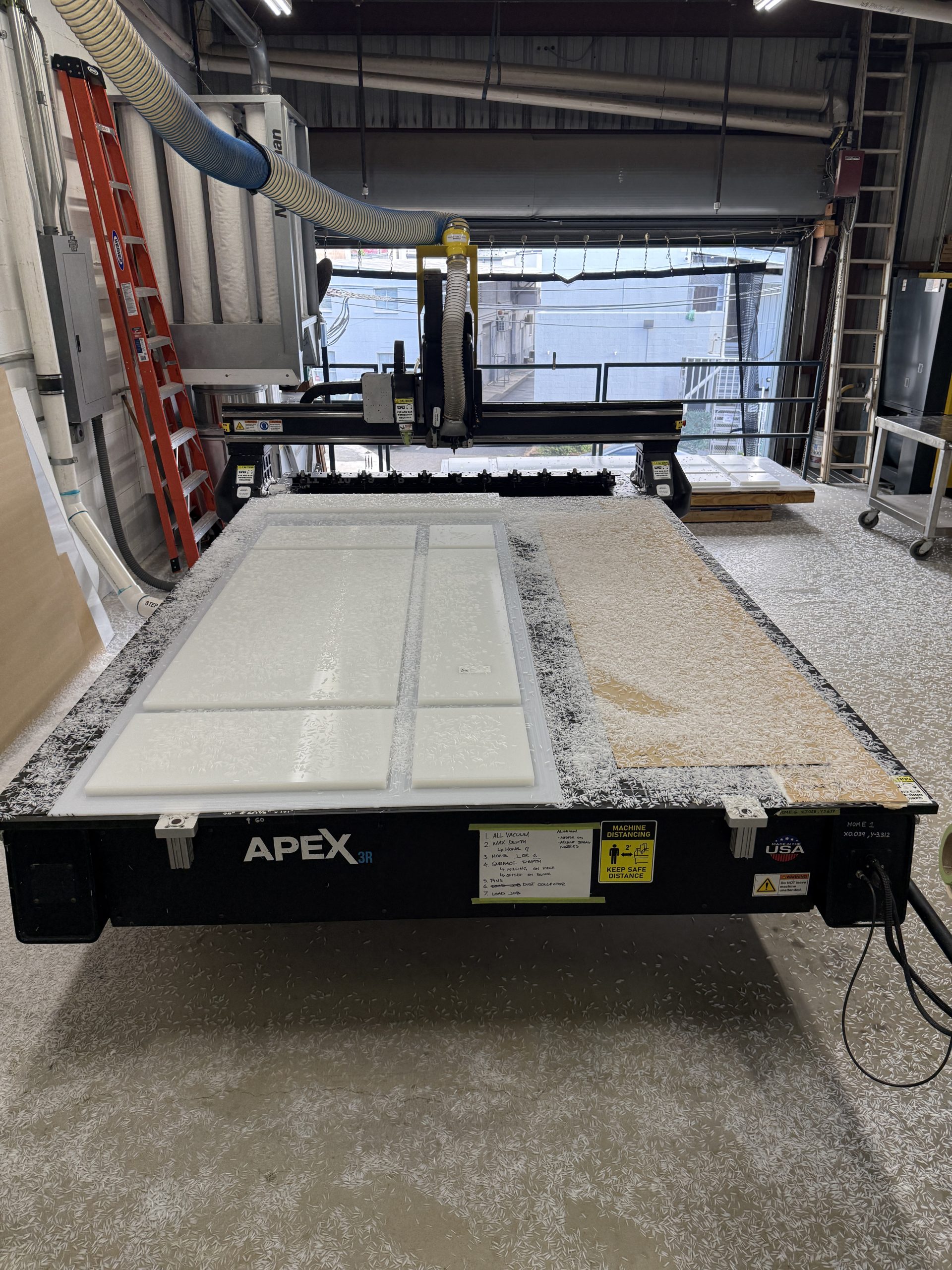
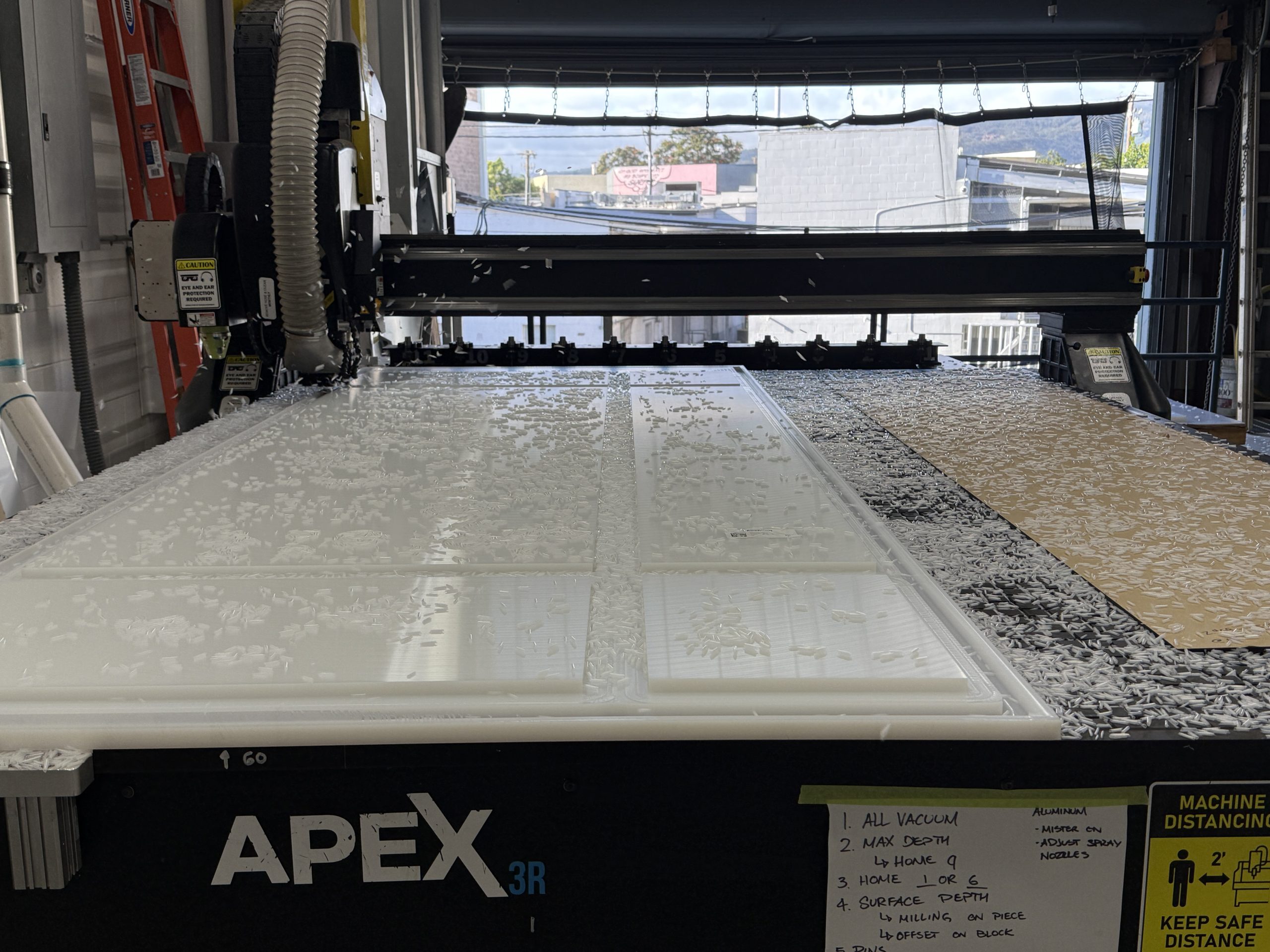
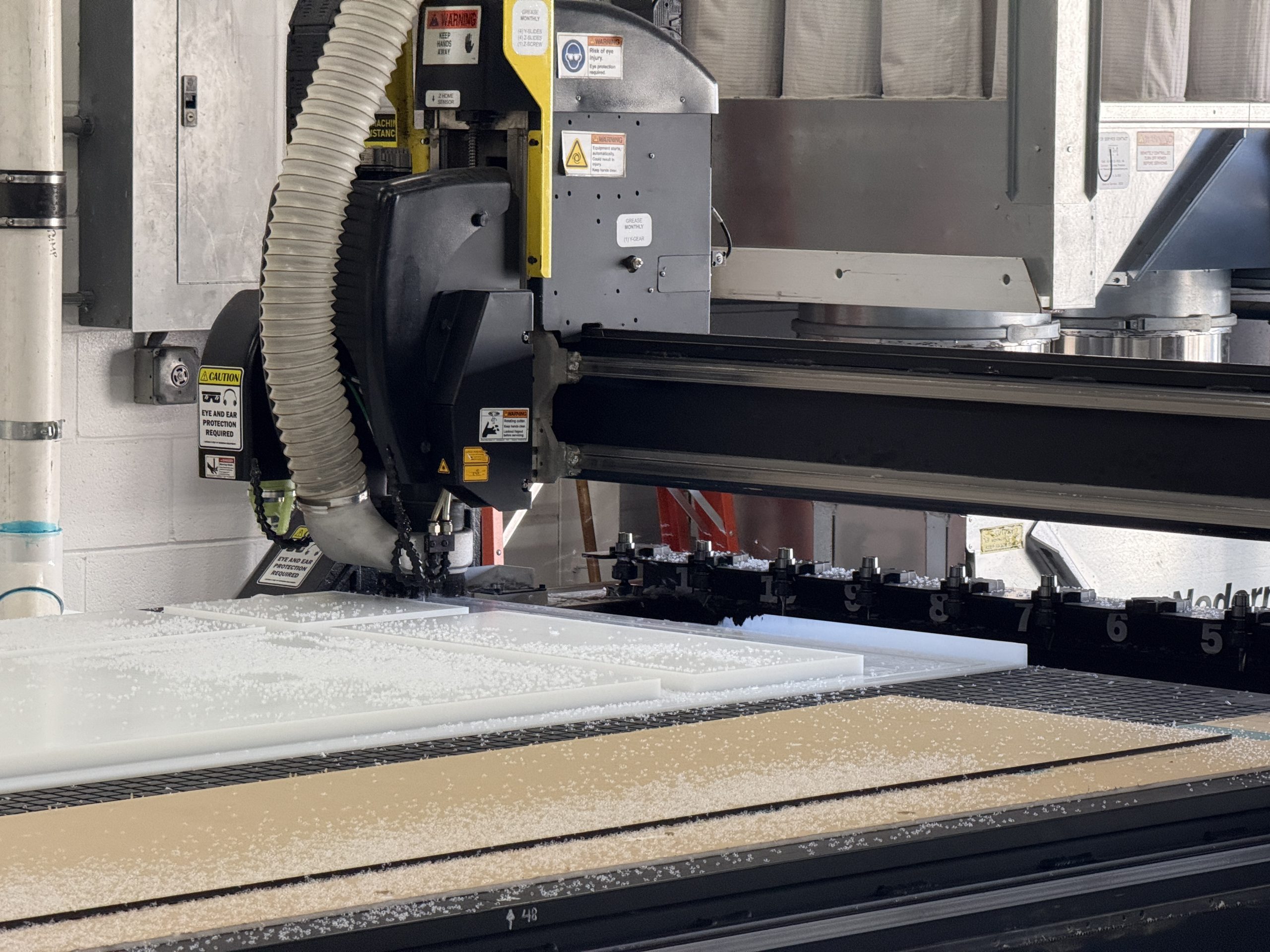
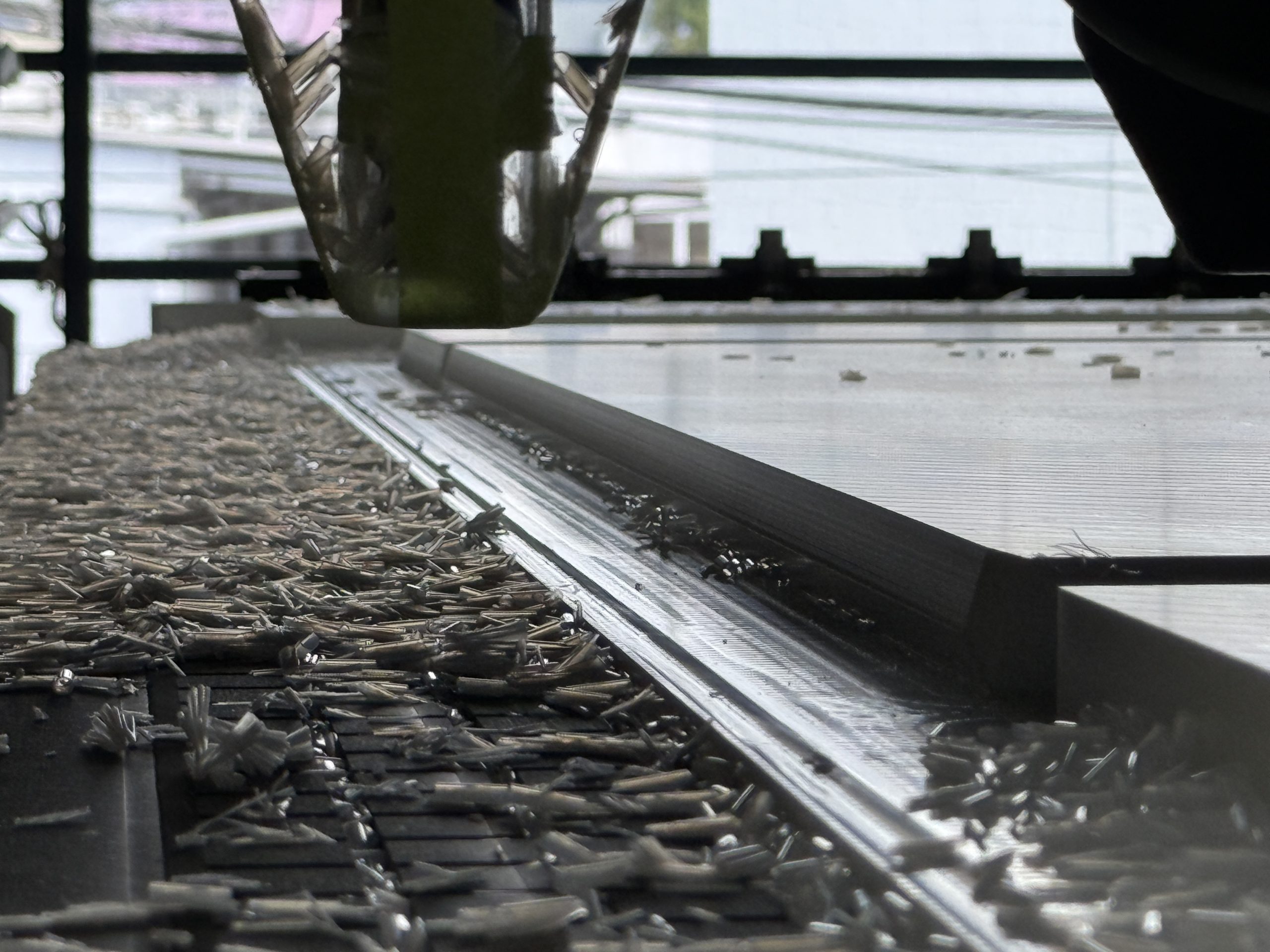
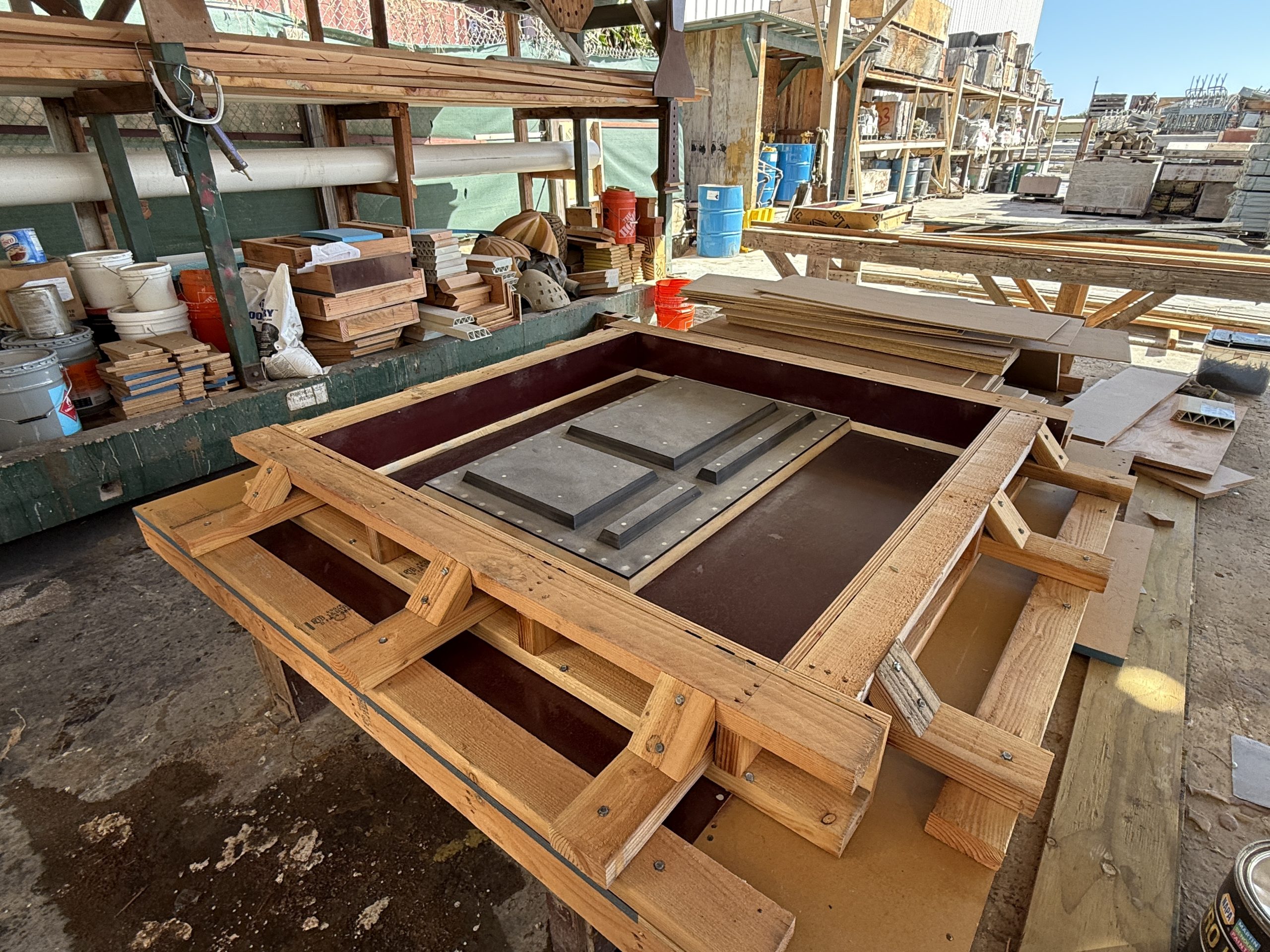
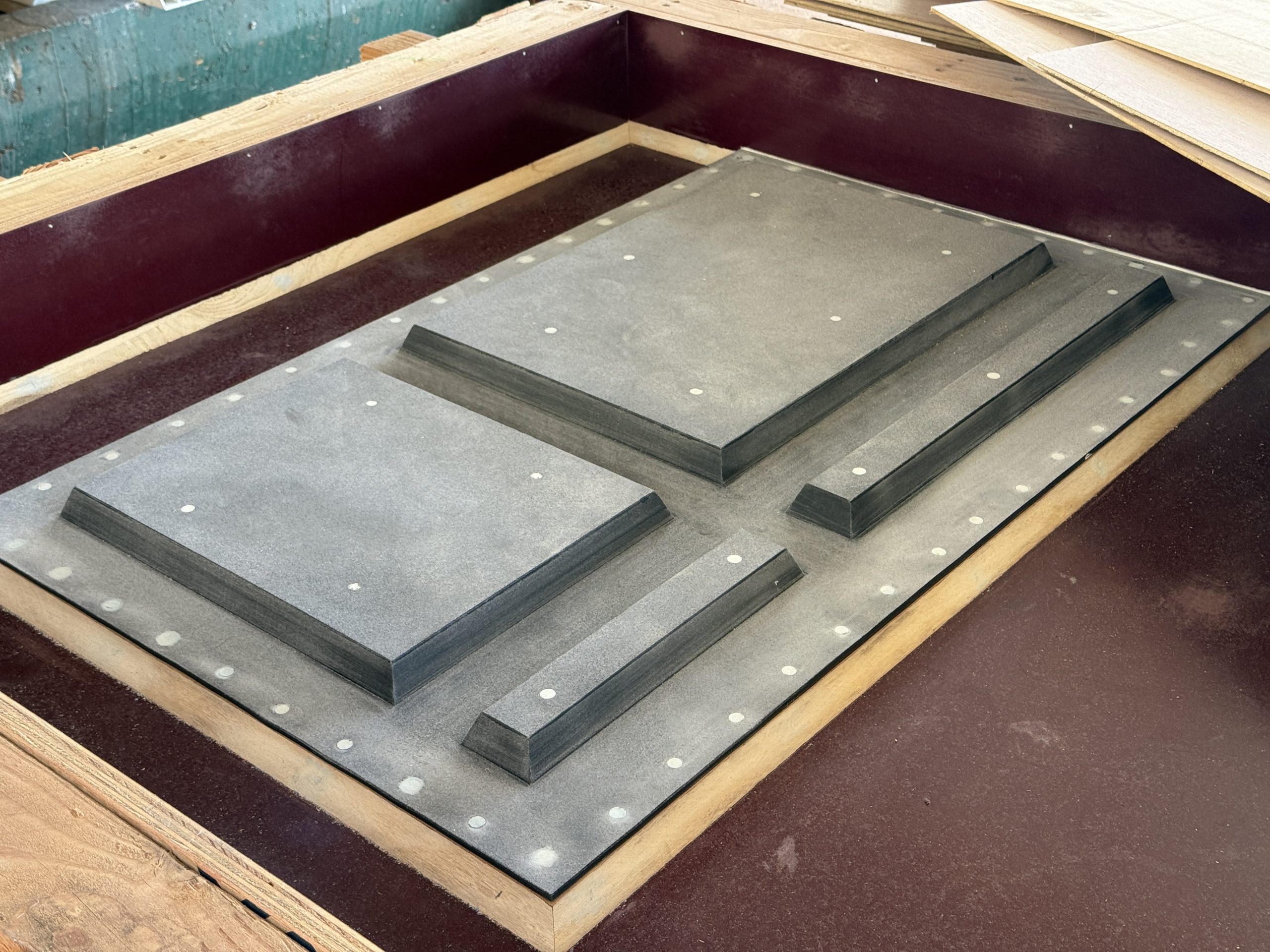
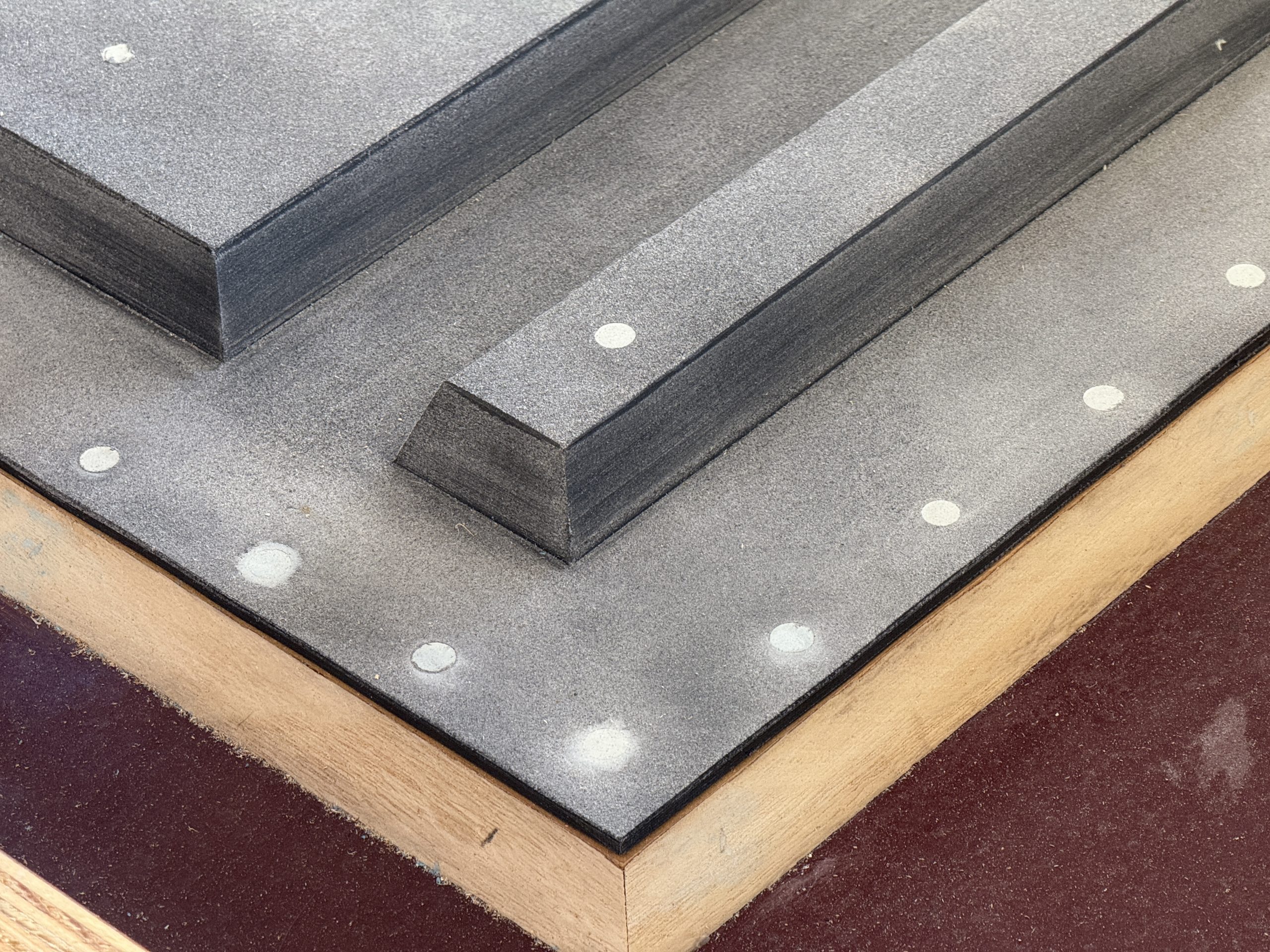
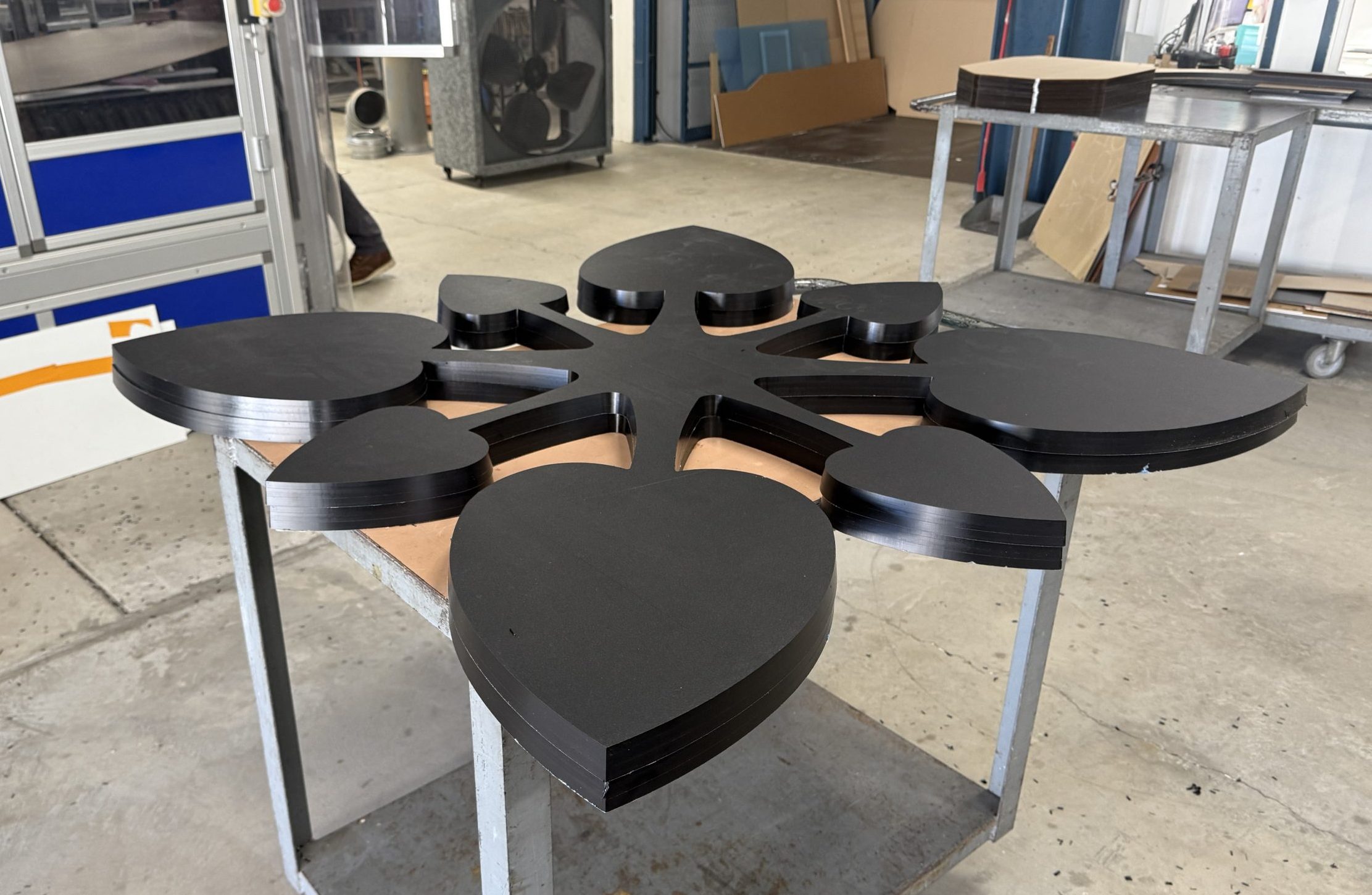
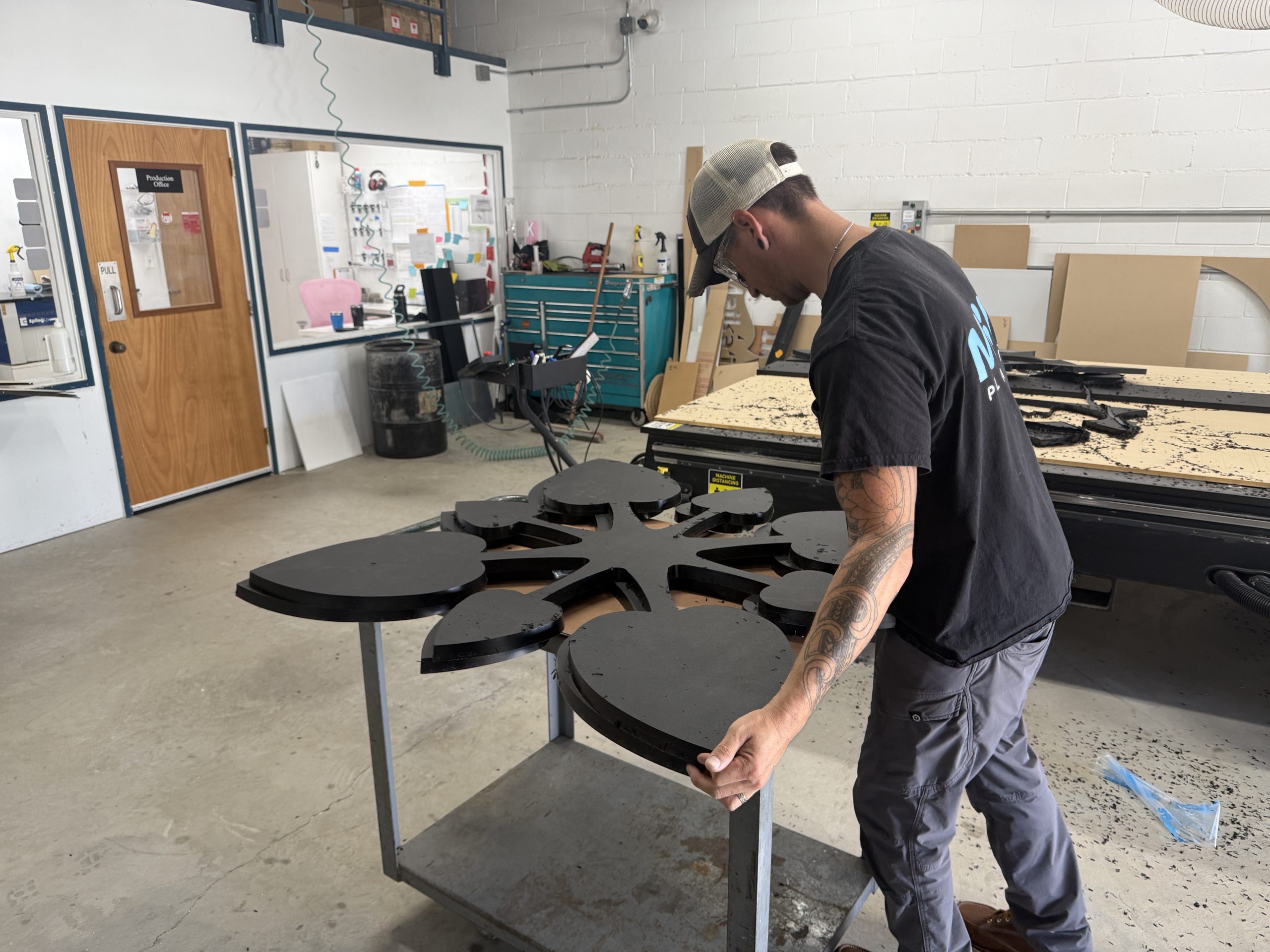
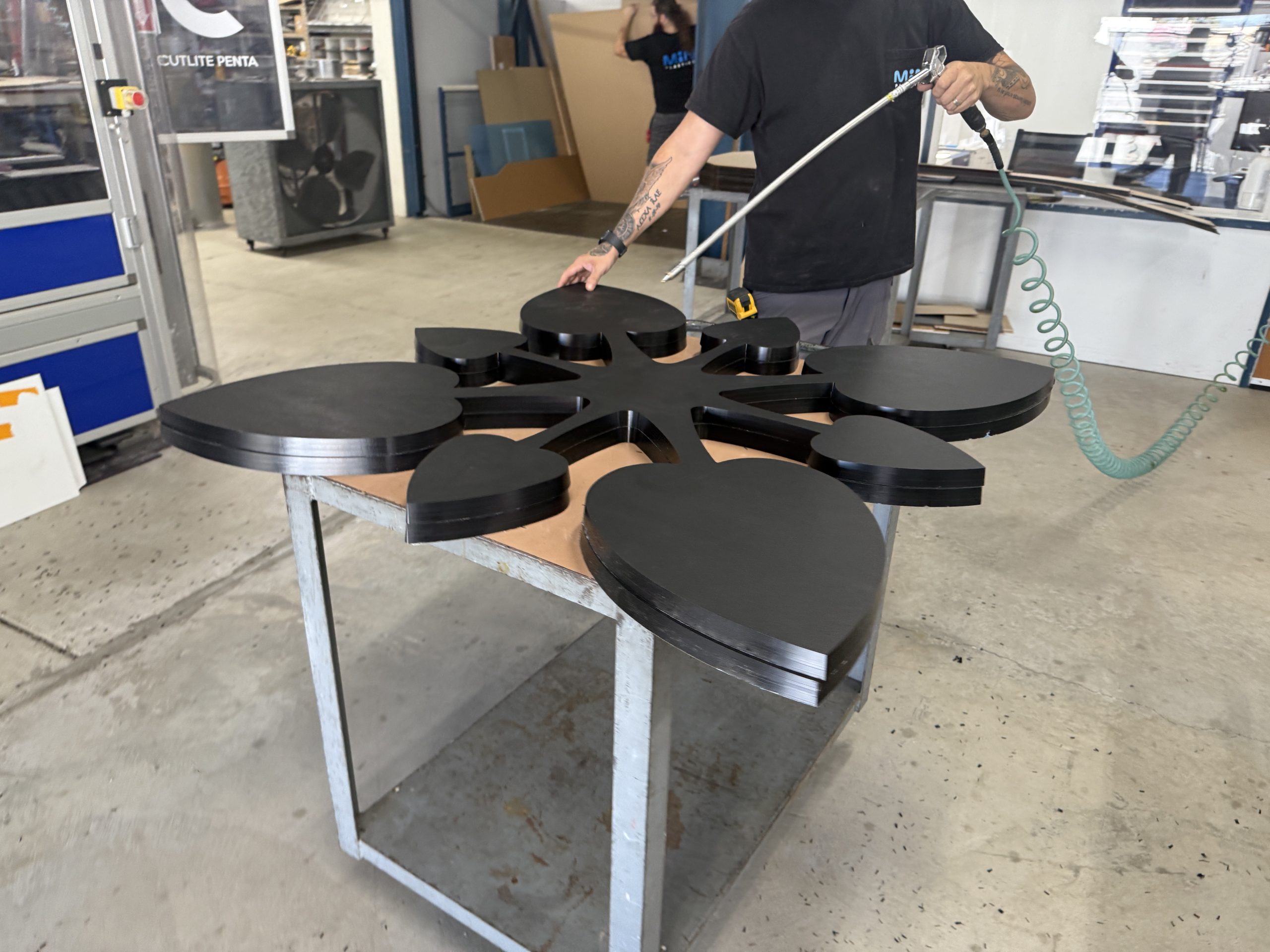
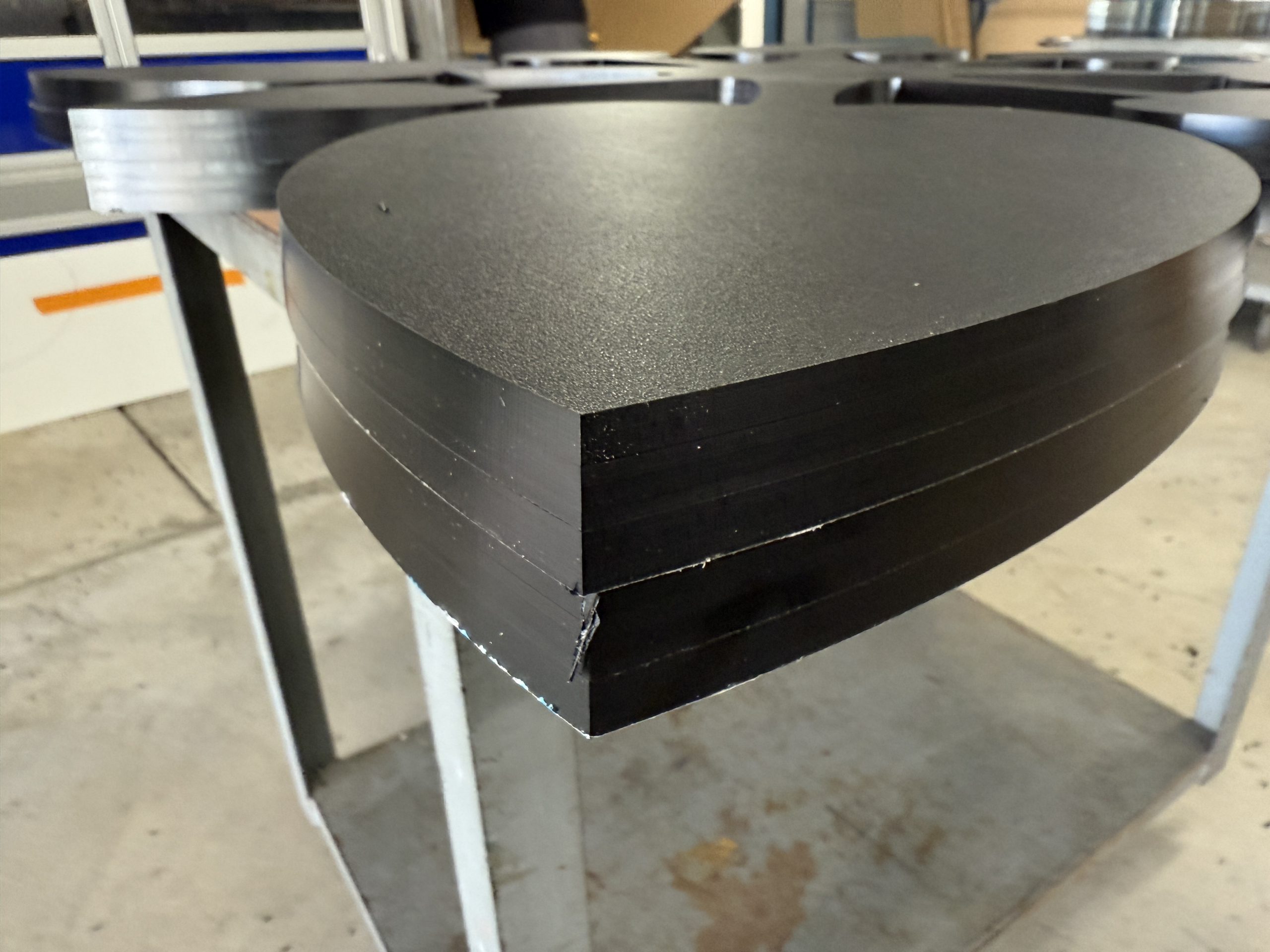
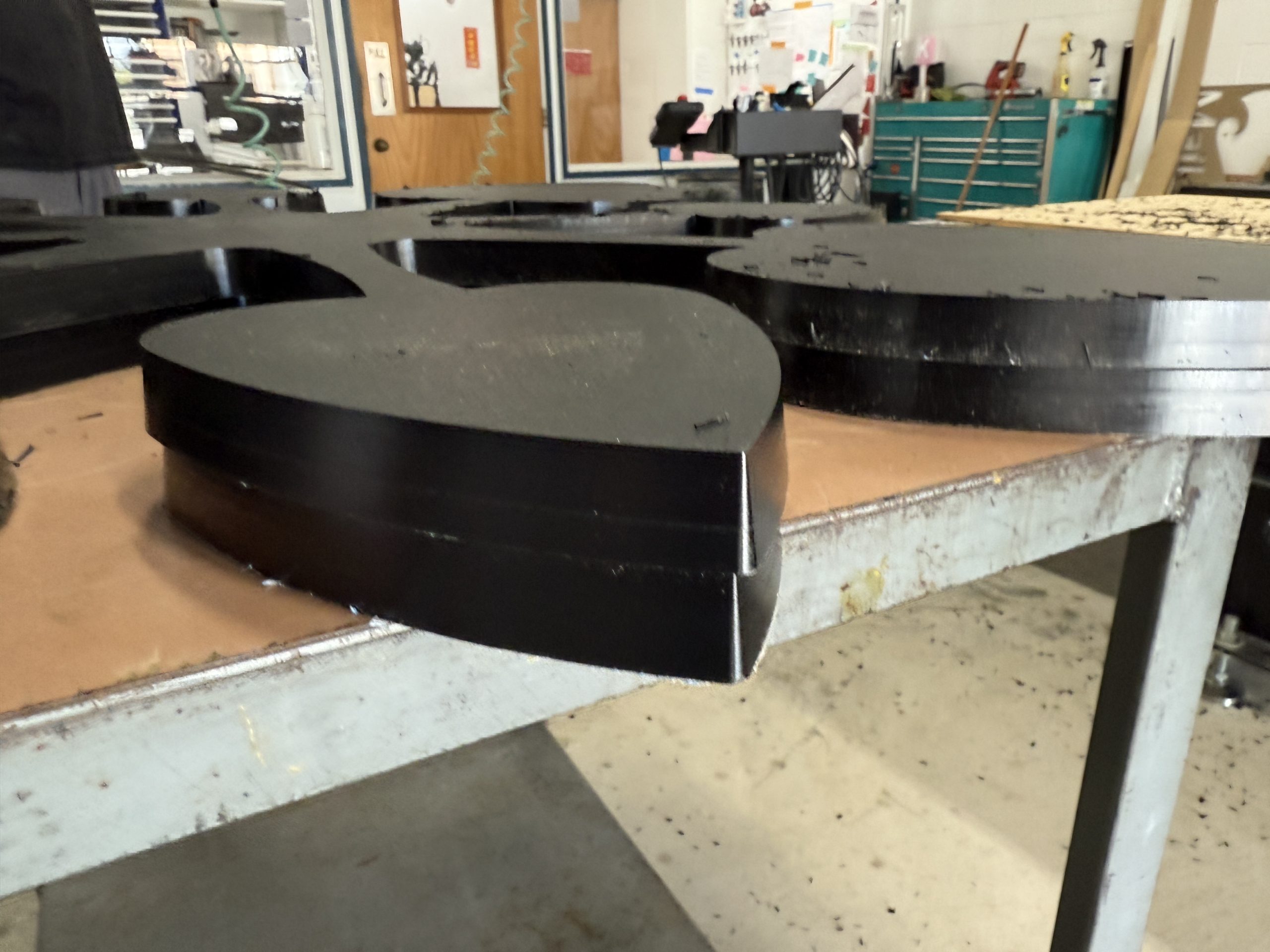
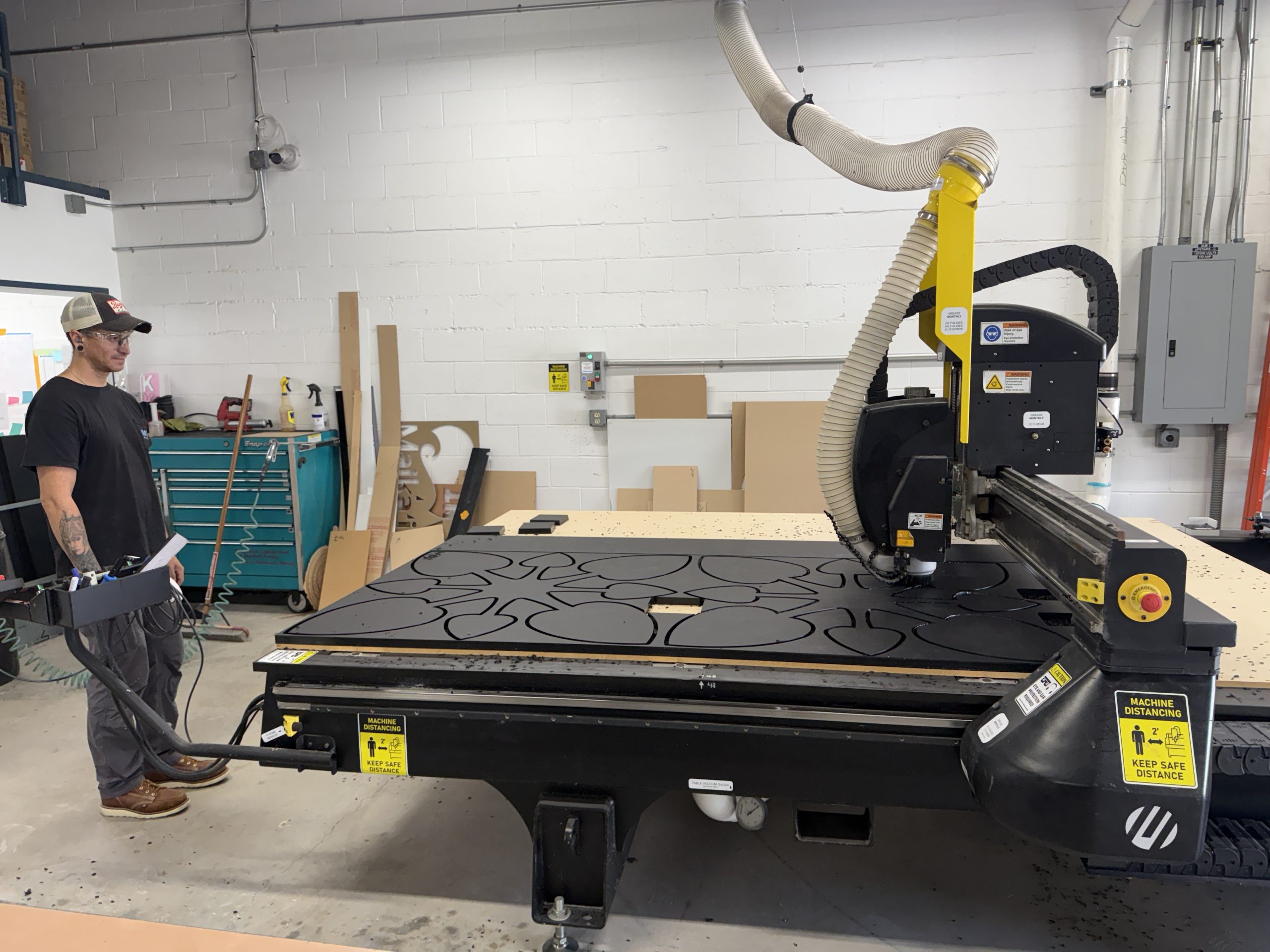
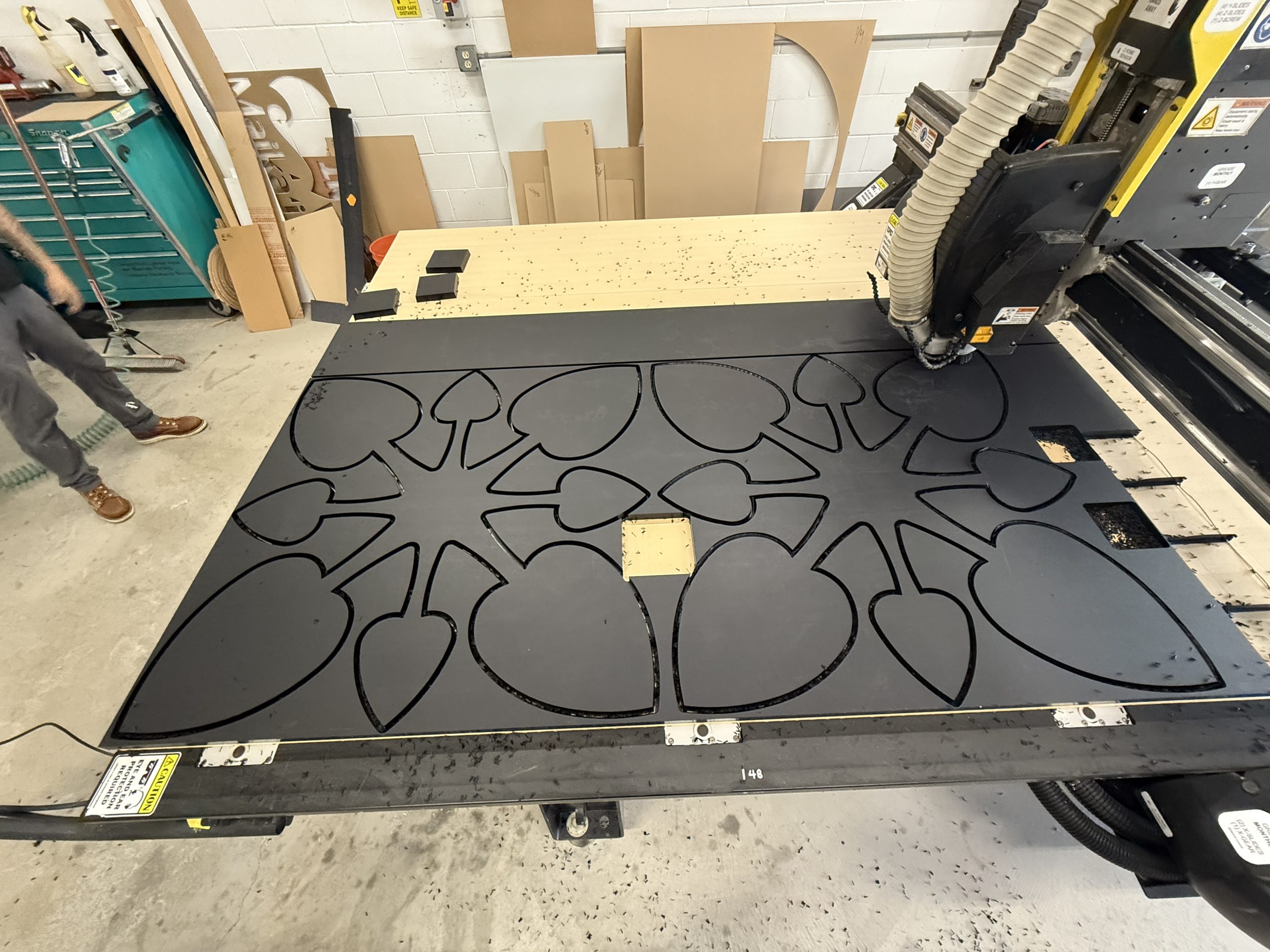
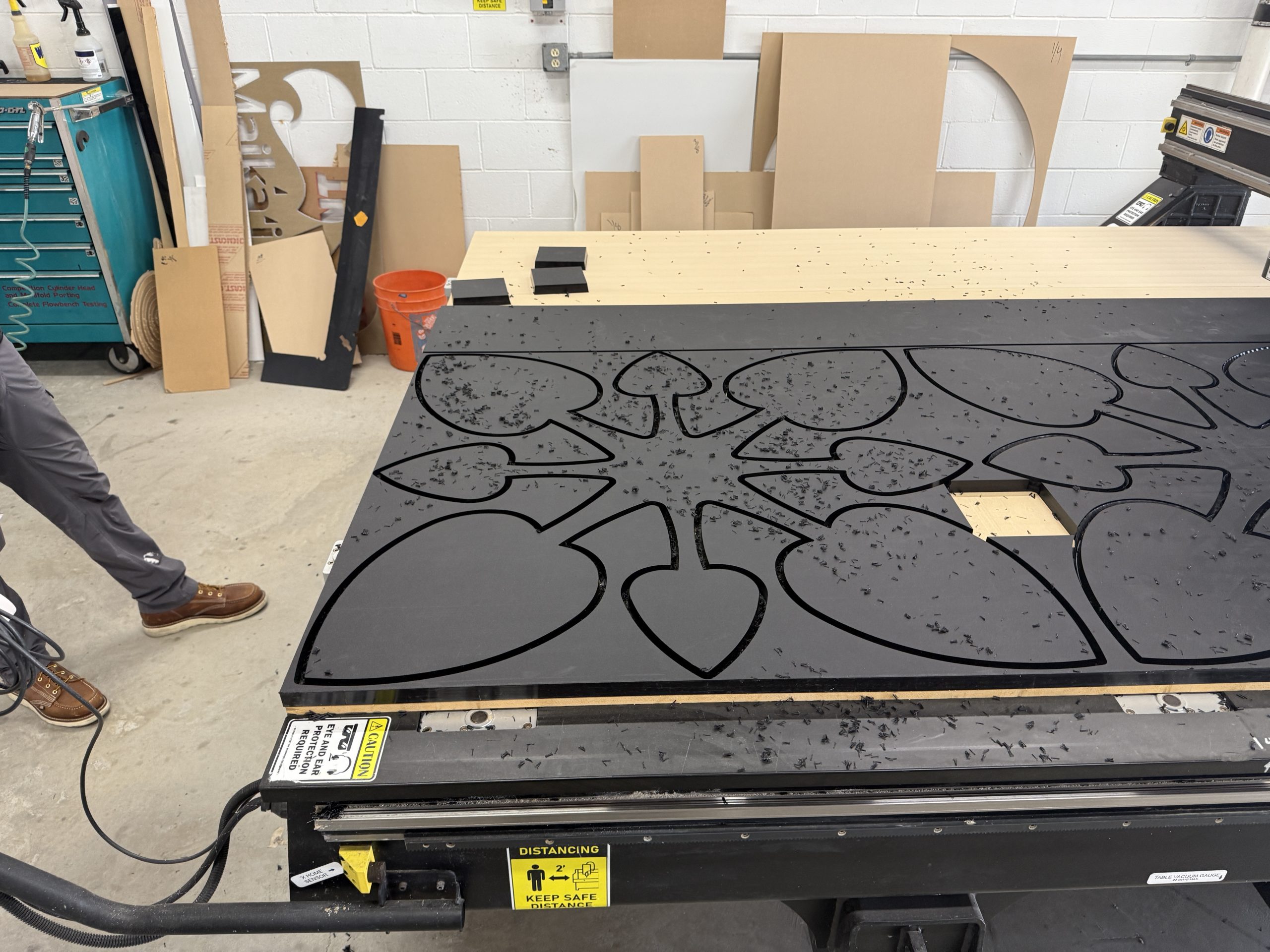
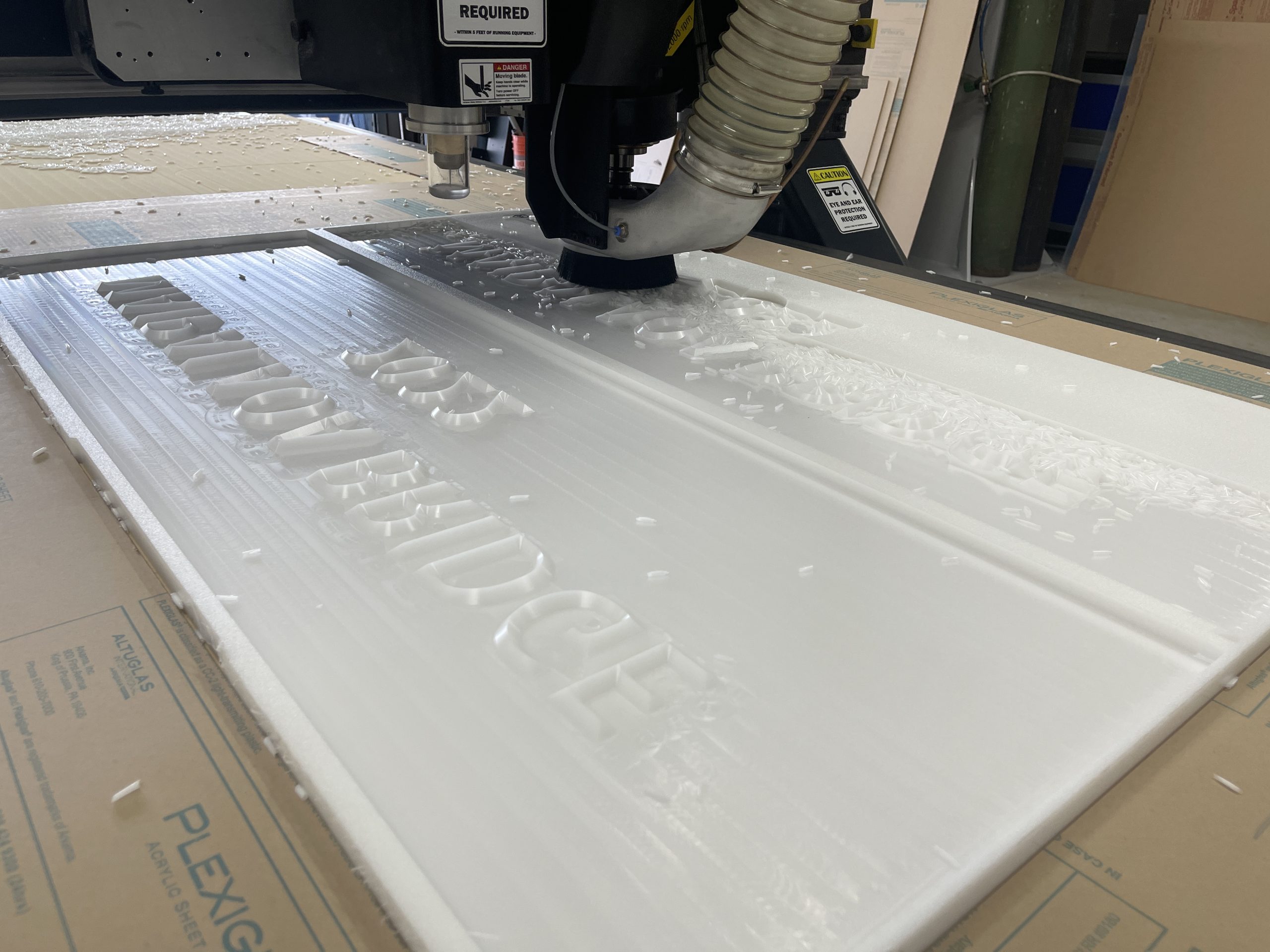
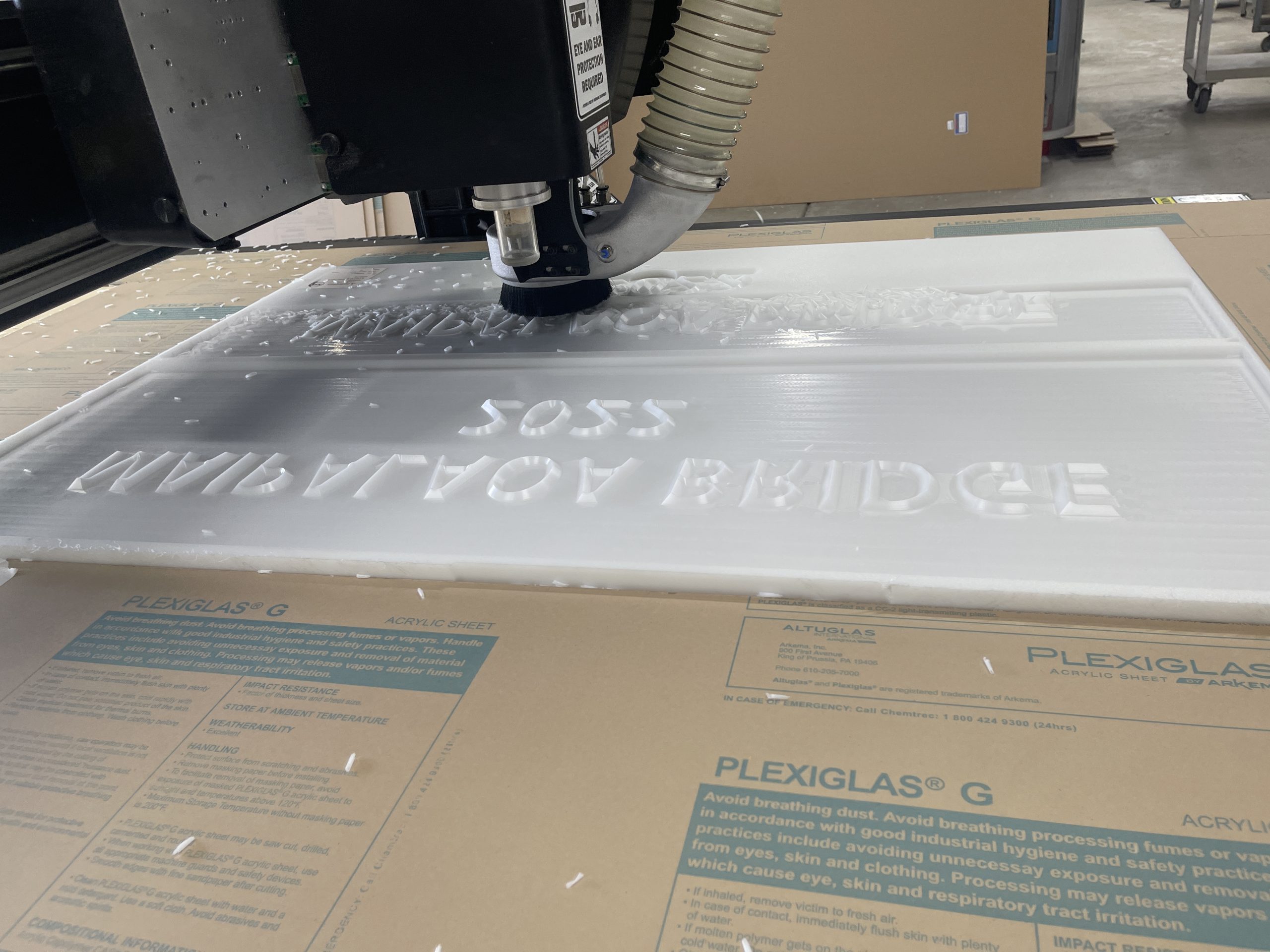
We support their process by CNC routing high-density polyethylene (HDPE) sheets into precision mold inserts used inside precast concrete forms. Each insert is machined to the required pattern and includes a controlled draft angle on the edges, allowing the concrete to release cleanly from the mold without damaging the finished surface.
For larger designs, multiple CNC-routed panels are produced and aligned to form a continuous pattern. Precise control of cut depth and edge geometry ensures each insert lines up accurately with adjacent panels, minimizing seams and reducing post-processing before concrete is poured. The smooth cut quality allows the molds to be used repeatedly with consistent results.
In addition to HDPE for higher-run production molds, we have also fabricated inserts from UHMW and plywood for specific applications, giving contractors flexibility based on design, durability, and production requirements.
Why it worked:
CNC routing provided precise pattern replication across multiple panels
Draft angles ensured clean concrete release from the mold
Accurate depth control minimized seams between patterned sections
HDPE and UHMW materials allowed repeated use with minimal wear
Smooth surface finish reduced prep time before concrete pours
These CNC-routed mold inserts allow precast manufacturers to offer custom architectural design features as an add-on option while maintaining production efficiency.
Need precision-machined or patterned components for industrial applications? Contact us to discuss your project.
GPRM Prestress | Pattern Development
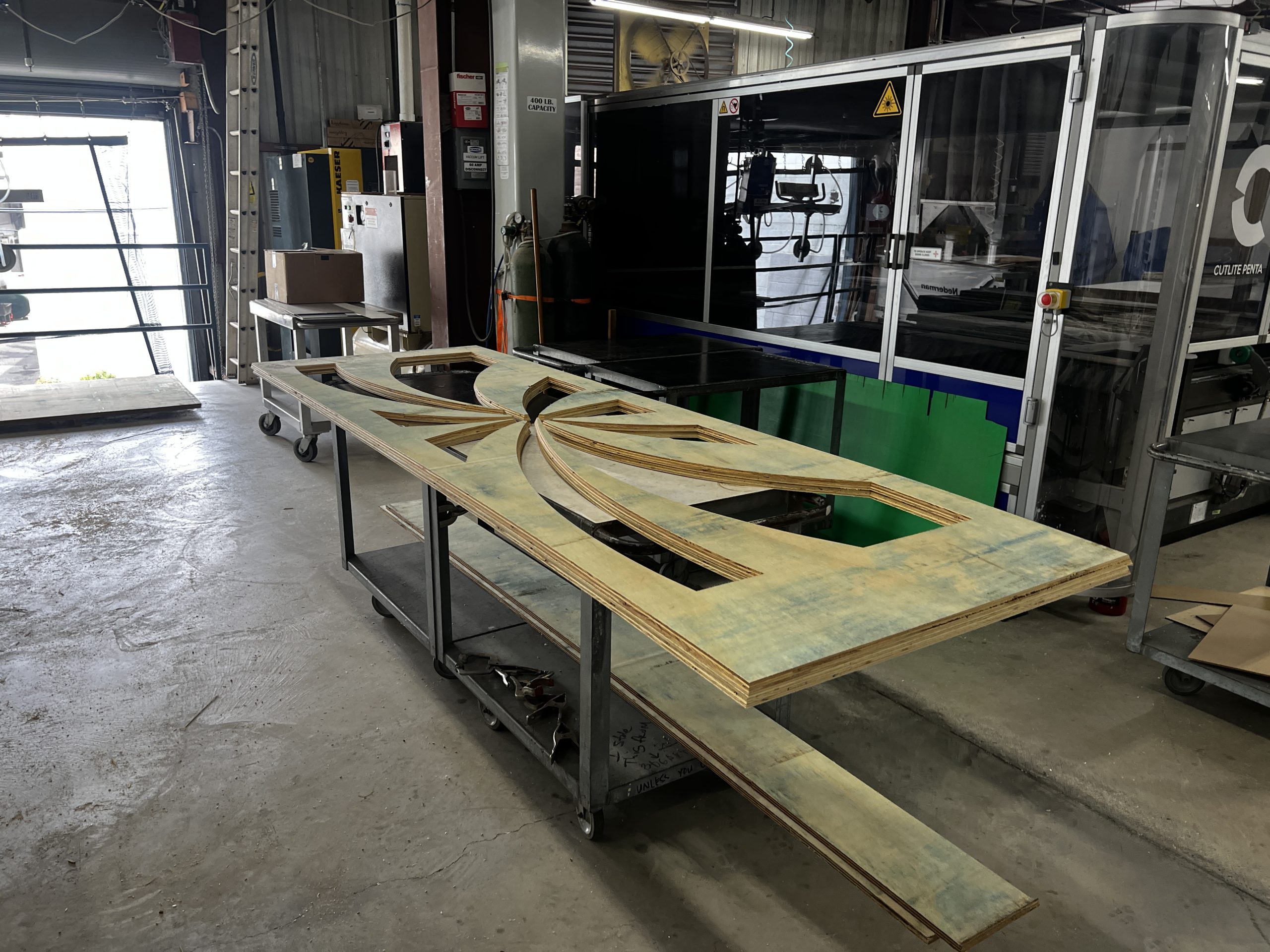
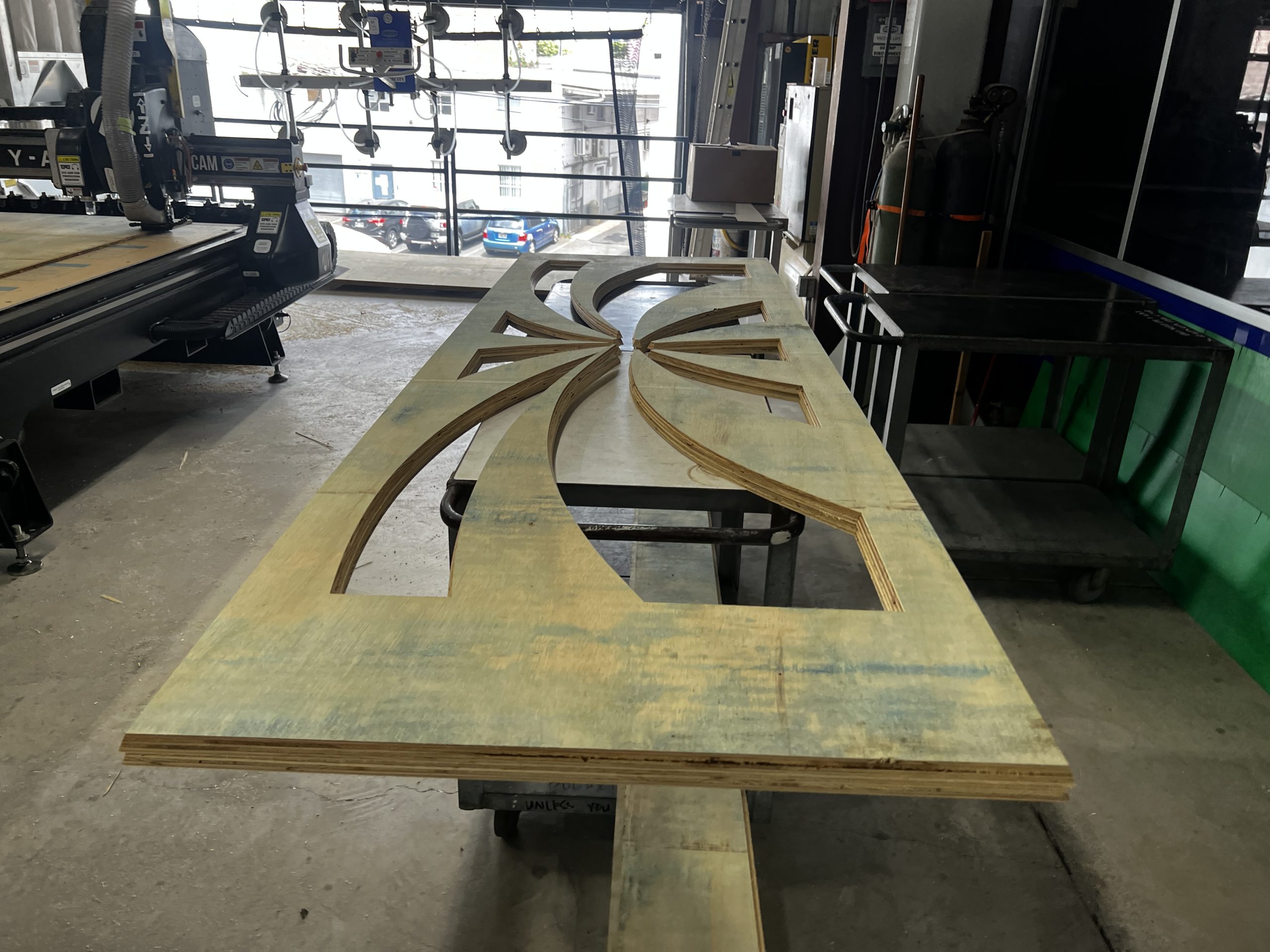
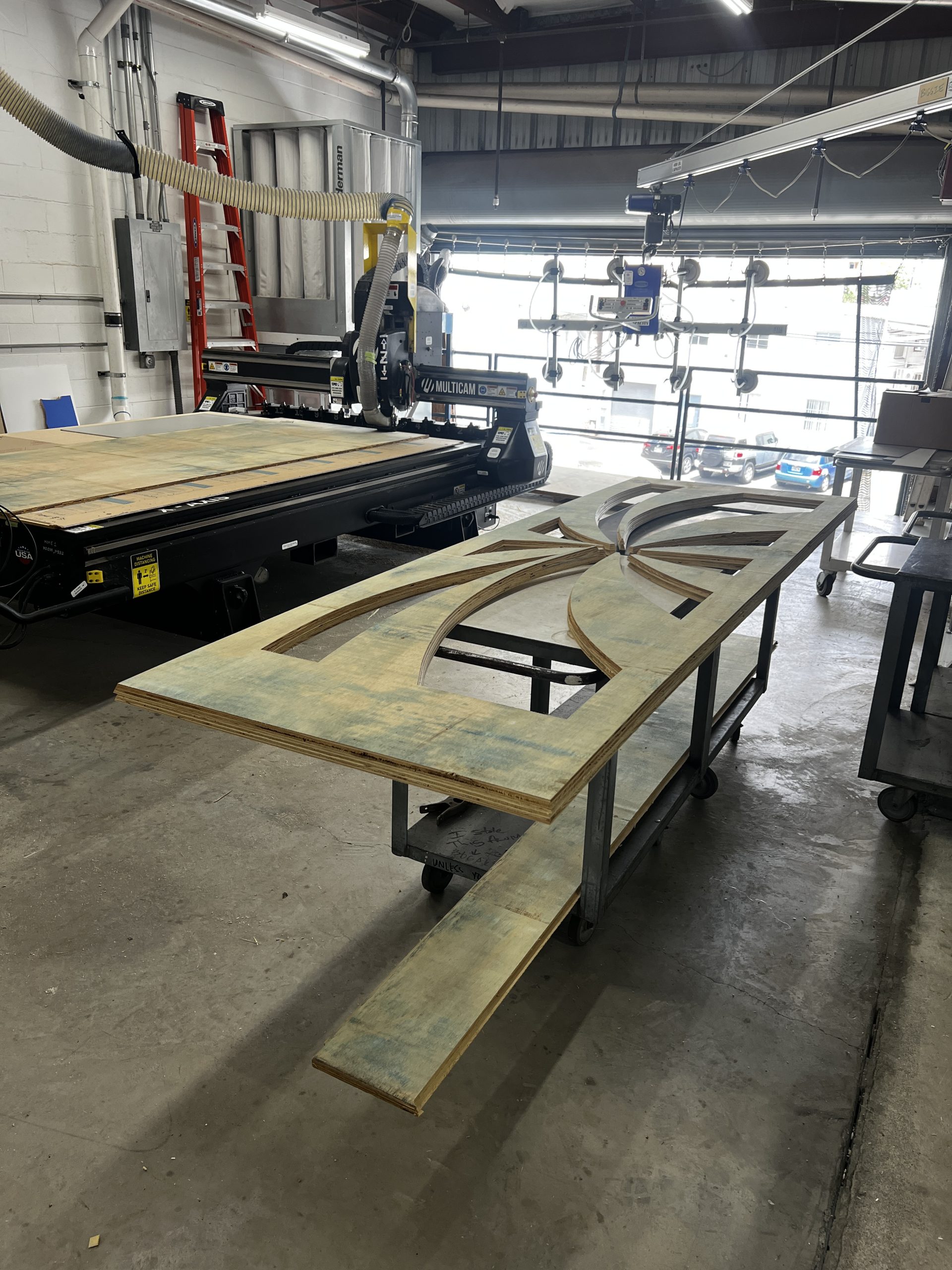
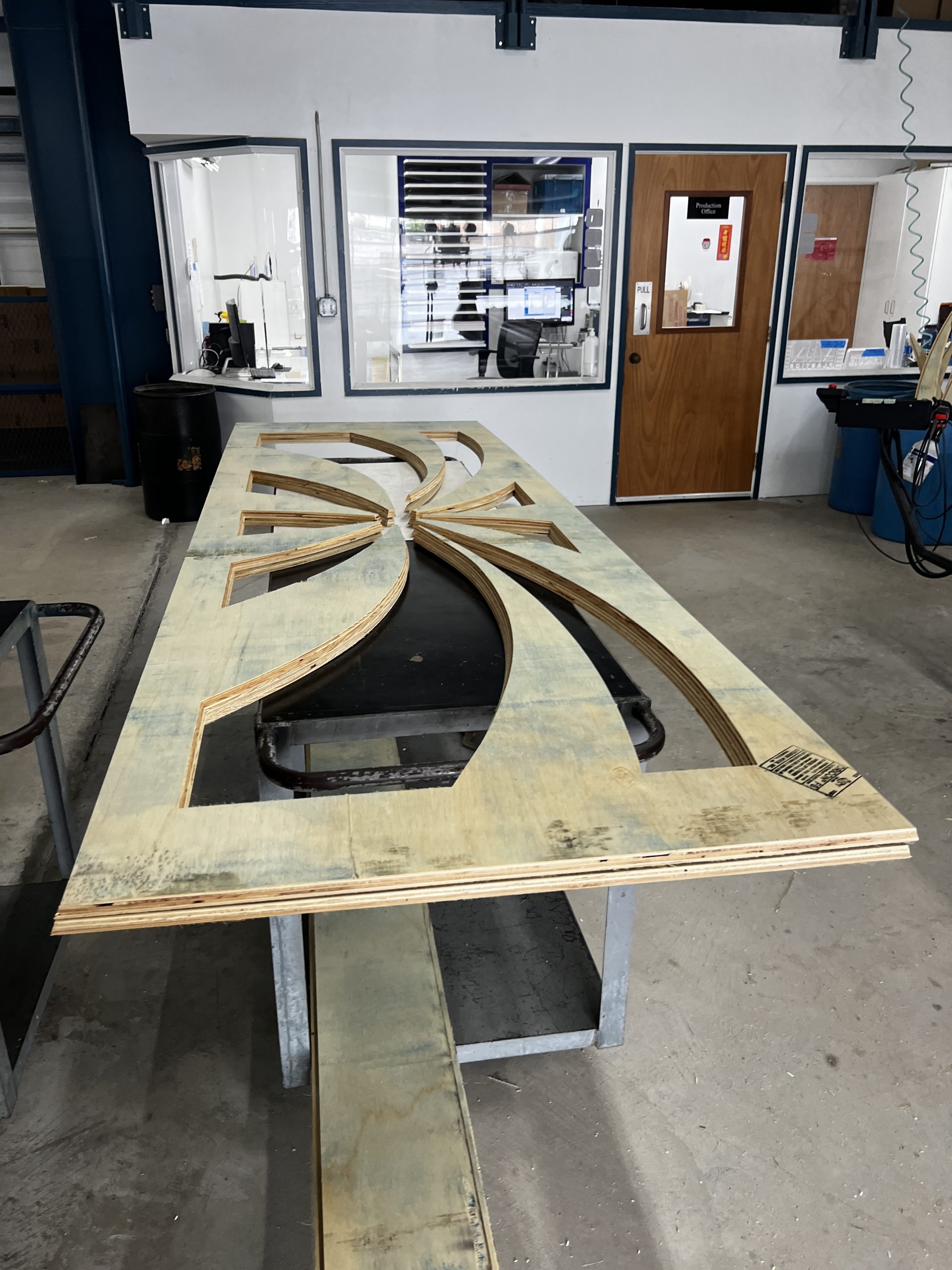
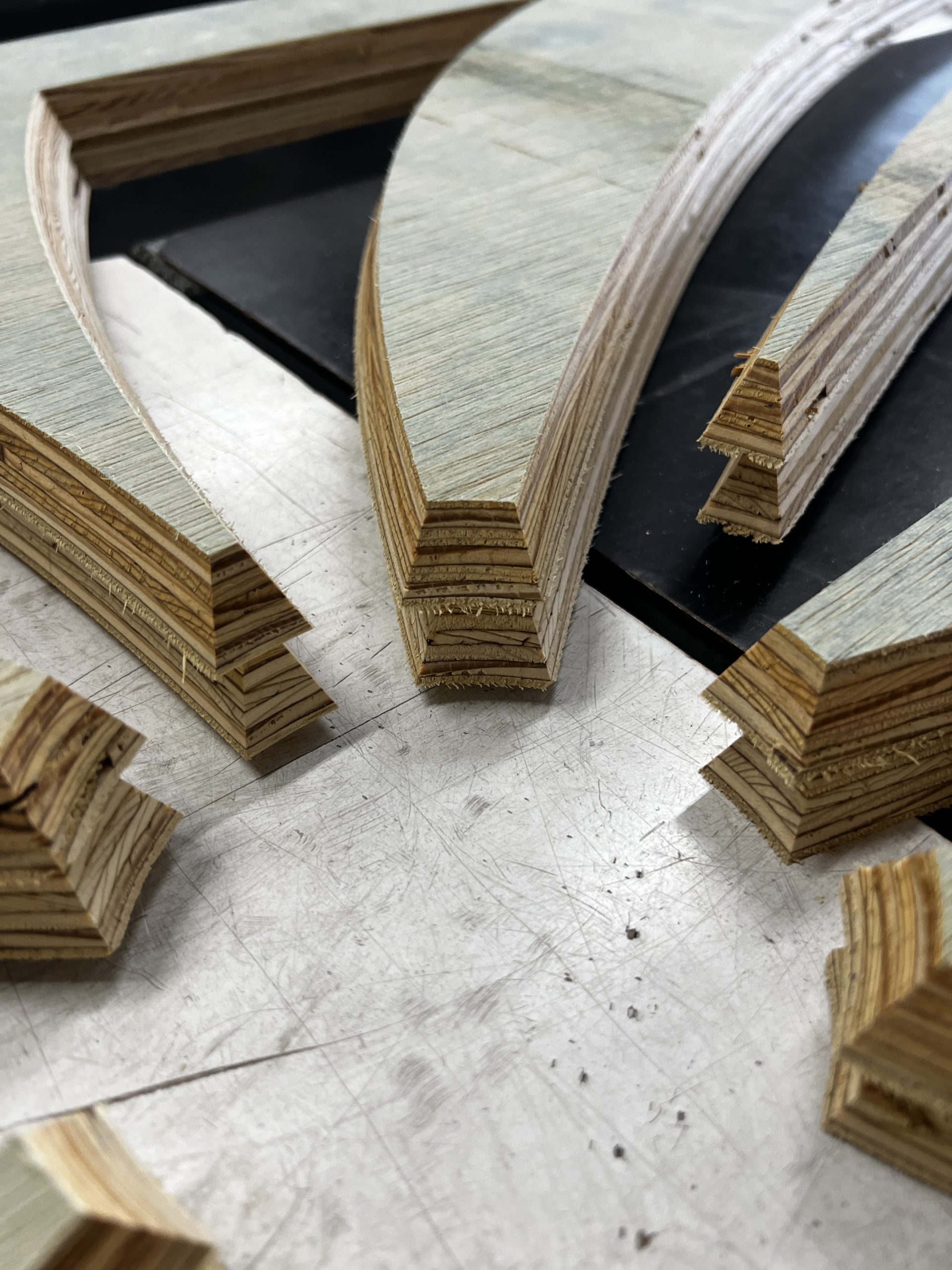
As part of GPRM Prestress patterned precast workflow, a ¾-inch plywood template was required to serve as the master form for a silicone mold. The customer’s design, measuring approximately 10 feet in length, would have taken hours of manual cutting, shaping, and finishing to produce accurately by hand.
Using CNC routing, we precisely cut the customer’s design into plywood and applied a custom draft angle to support clean mold release. The finished plywood template was then used to create a silicone mold, which became the master for producing temporary molds inserted into the concrete forms.
By using CNC machining instead of manual fabrication, we were able to complete the template in under a week, significantly reducing lead time while maintaining accuracy and consistency across the design.
Why it worked:
CNC routing replaced labor-intensive manual cutting and finishing
Draft angles were machined accurately to support mold release
Large-format capability accommodated a 10-foot-long template
Fast turnaround kept the precast production schedule on track
Plywood provided an efficient, cost-effective master mold solution
This approach allowed GPRM Prestress to develop complex patterned molds efficiently while preserving flexibility in their precast design process.
GPRM Prestress | Custom Precast Detailing
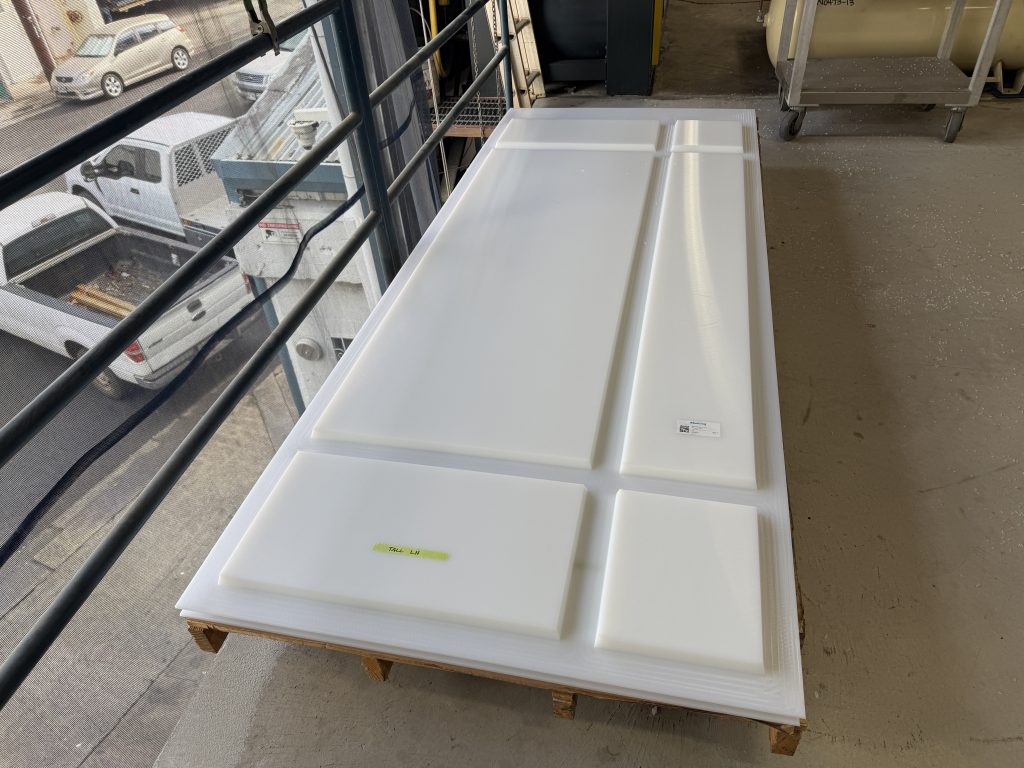
For a specialized architectural wall segment, GPRM Prestress required mold inserts with deeper surface detail to replicate the appearance of adjacent window panels within the precast wall assembly. This application called for mold plugs fabricated from 1¼-inch-thick material, allowing the pattern to be milled to a full 1-inch depth while maintaining proper release geometry.
Because this thickness was not a standard stocked item, we sourced special-order HDPE sheets measuring 4 feet by 10 feet specifically for this project. Prior to full production, the work was completed in multiple phases, beginning with a smaller sample plug machined from test material. This sample allowed the customer to verify pattern depth, draft angle, and visual effect before approving the final run.
Once approved, we CNC-milled the full-size inserts using a custom-ordered router bit to achieve the required depth and a precise draft angle. The resulting mold inserts provided clean release, accurate alignment, and consistent detail across the wall panels.
Why it worked:
Special-order 1¼-inch HDPE enabled deeper mold detail
CNC machining delivered consistent 1-inch-deep relief across panels
Custom tooling ensured accurate draft angles for clean release
Phased sampling reduced risk before committing to full material order
Large-format capability supported full-size architectural wall segments
This approach allowed the precast panels to achieve enhanced visual depth while maintaining production efficiency and repeatability.
GPRM Prestress | Architectural Precast Design
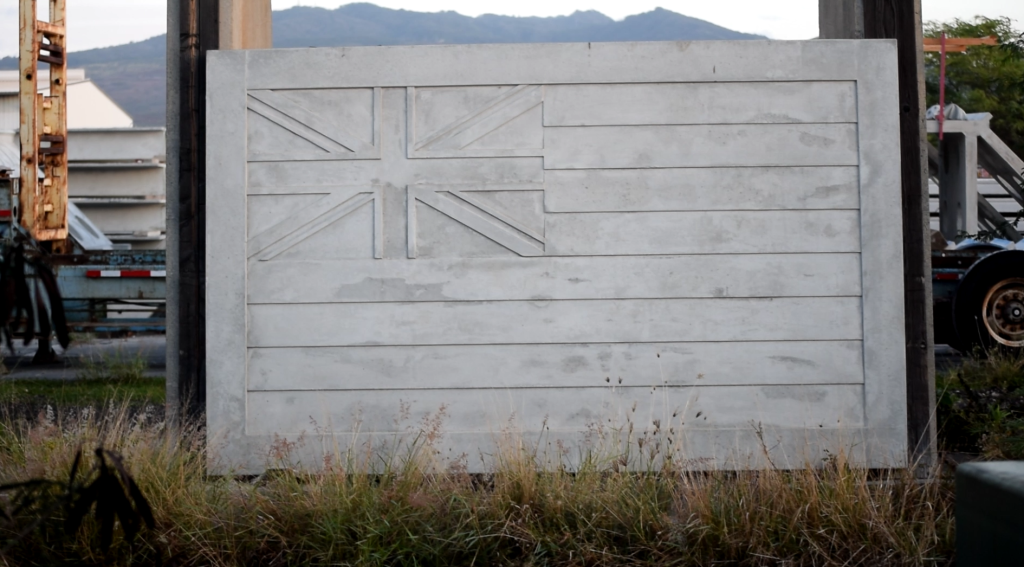
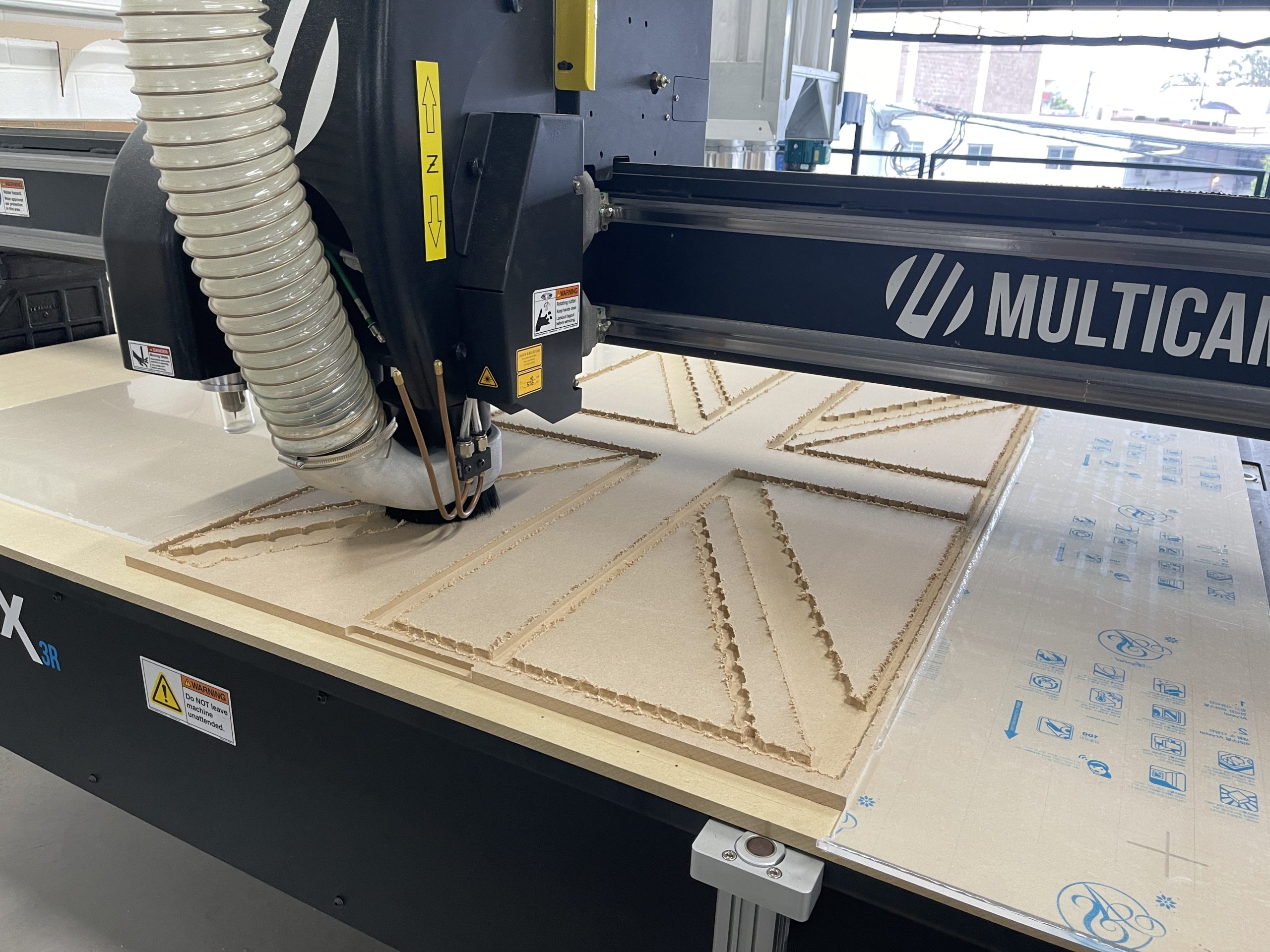
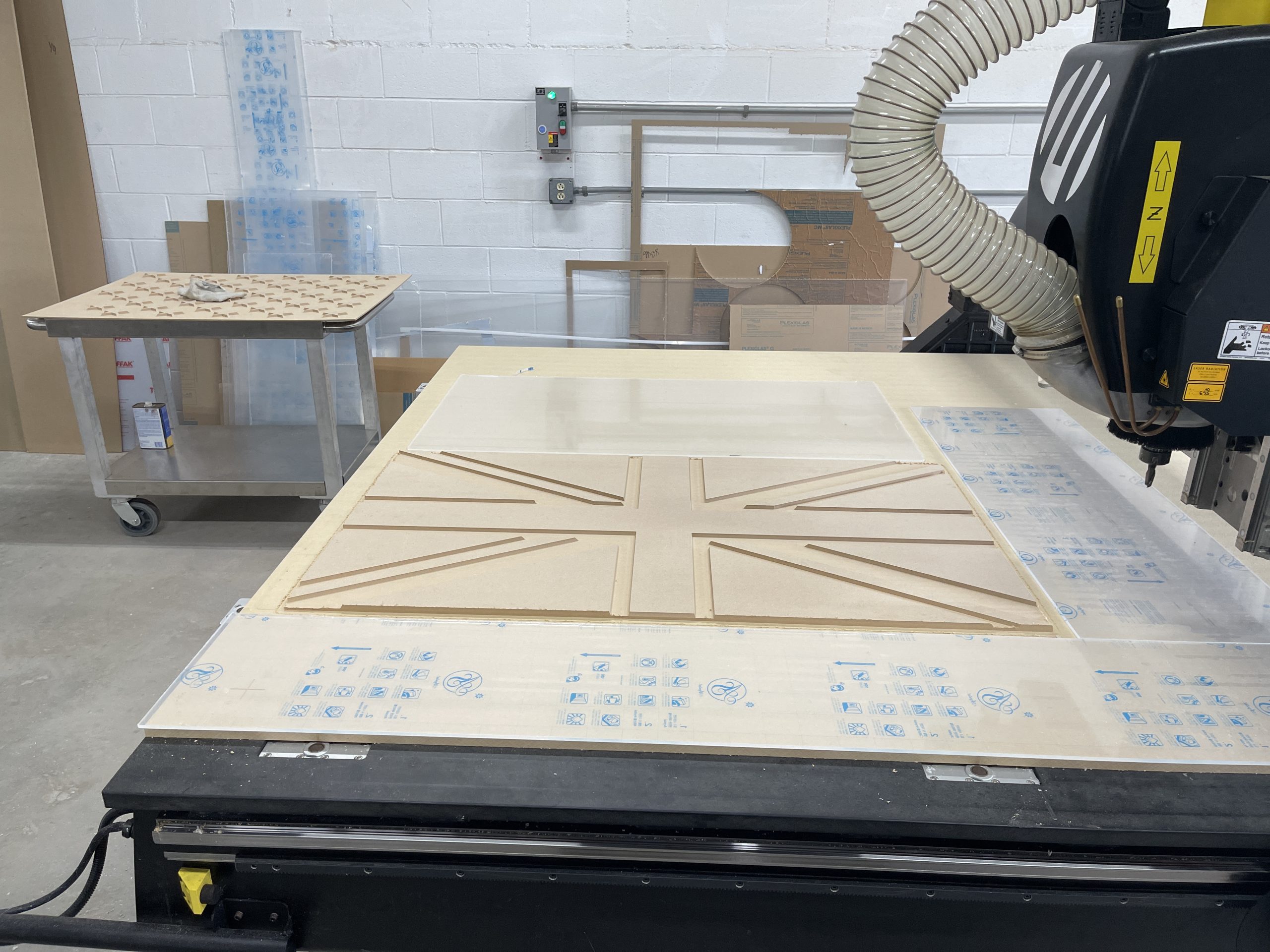
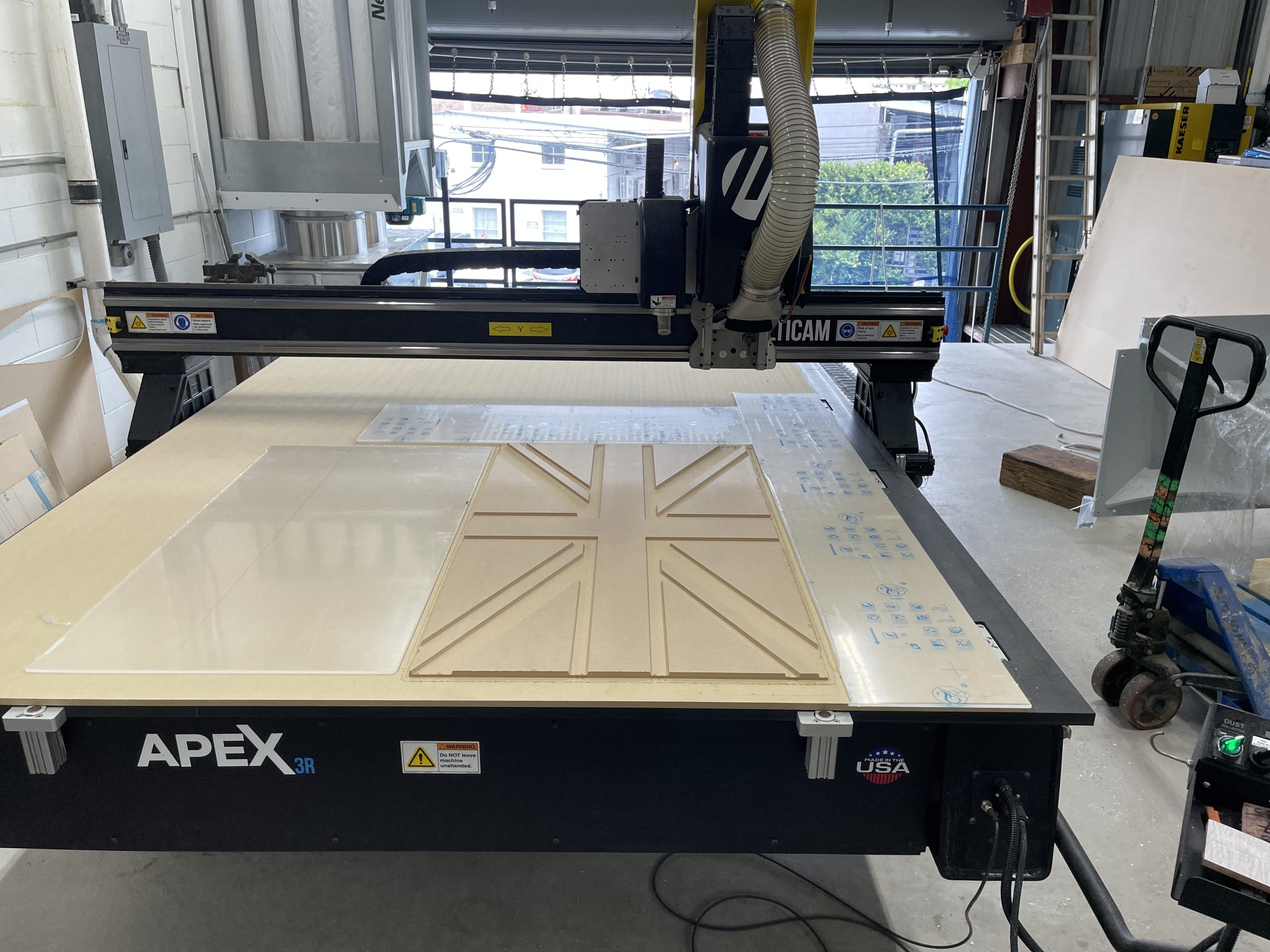
As part of an architectural precast concrete application, GPRM Prestress required a large-format Hawaiian flag design to be incorporated into a wall section. The design needed to be produced with custom draft angles to ensure proper concrete release while maintaining sharp, recognizable detail in the finished panel.
We CNC-routed the Hawaiian flag pattern from MDF, milling the design in multiple sections due to its overall size. Each piece was machined with consistent depth and draft geometry, then carefully assembled into a single, continuous array to form the complete mold insert.
The assembled MDF insert was used within the precast mold system to create a detailed surface pattern in the concrete panel, allowing the flag design to be reproduced accurately and consistently.
Why it worked:
CNC routing ensured precise replication of the Hawaiian flag design
Custom draft angles allowed clean release from the concrete mold
Multi-piece fabrication enabled large-format patterns beyond single-sheet limits
Careful alignment minimized seams between assembled sections
MDF provided a cost-effective solution for architectural mold development
This project demonstrates how CNC-routed templates can be used to translate detailed graphic designs into durable, repeatable precast concrete features.
Shown here are additional examples of architectural mold inserts and custom CNC-cut designs produced for various projects over time. These pieces reflect a range of materials, patterns, and fabrication approaches used to support architectural and decorative concrete work.
Copyright © 2025 Min Plastics | Serving Hawaii and the Pacific Since 1950